Google Search Console has for many years been one of the most valuable tools for SEO specialists – but also a tool where things have been quiet on the feature front for a long time. That has changed.
In a short space of time, Google has introduced a number of significant improvements that both strengthen analytical work and make it easier to understand organic performance. Several of the features have been requested for years, and now they are finally being rolled out.
Here we go through the four most important updates – in order of priority.
1. Branded queries filter – automatic filtering of brand traffic
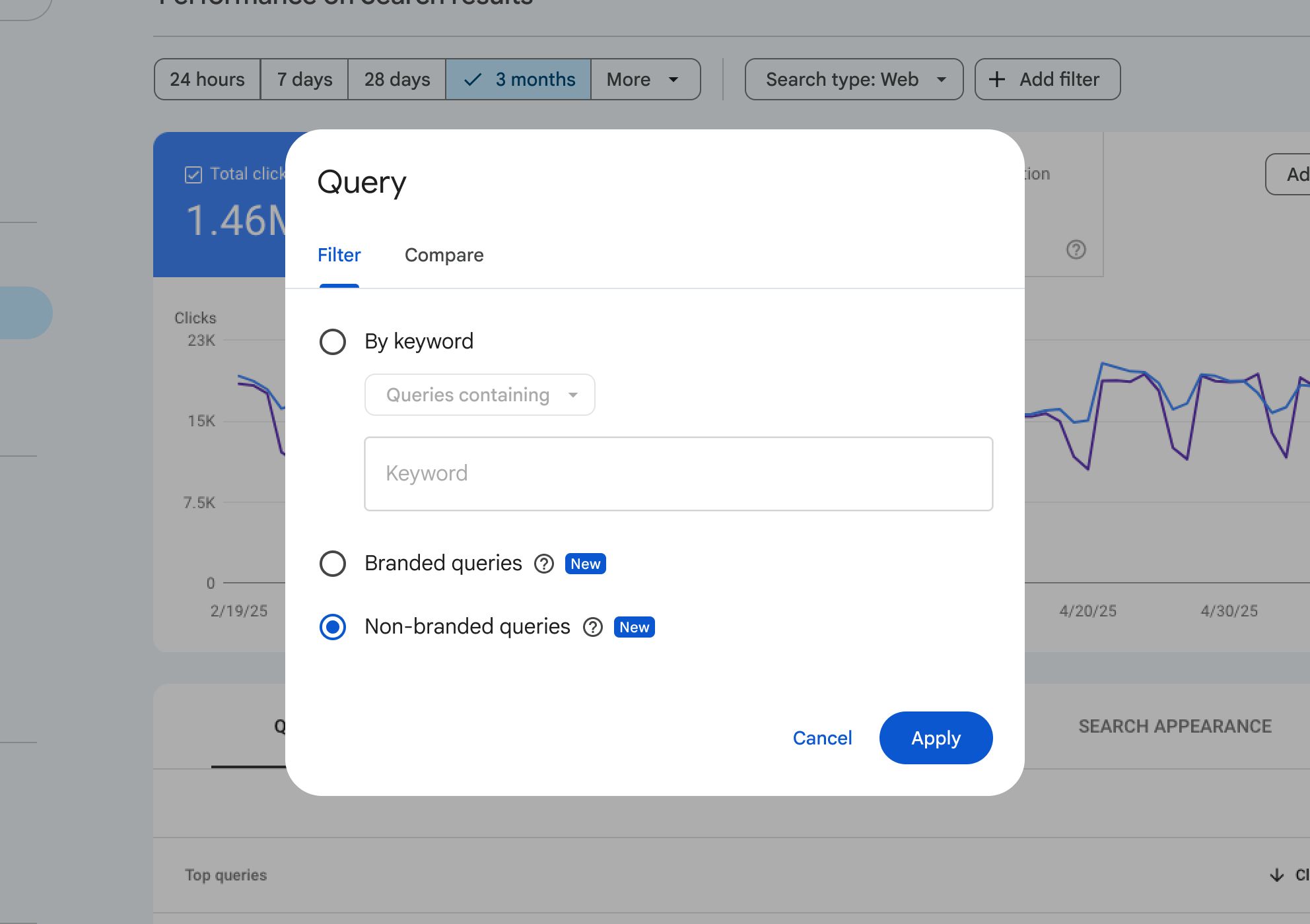
The most important and most requested news is the new branded filter in the Performance report.
Until now, manually excluding brand searches has been both time-consuming and imprecise, especially if the company name appears in many variations or misspellings.
With the new filter, Search Console automatically divides searches into branded and non-branded – including variations and misspellings.
Why does this matter?
- You get a clear picture of your actual SEO performance
- You avoid brand traffic distorting your reports
- You can better evaluate the effect of SEO efforts over time
This is a huge win for both specialists and marketing teams working in a data-driven way.
2. Shipping and return policies directly in Search Console
This update is aimed especially at smaller webshops that do not use Google Merchant Center.
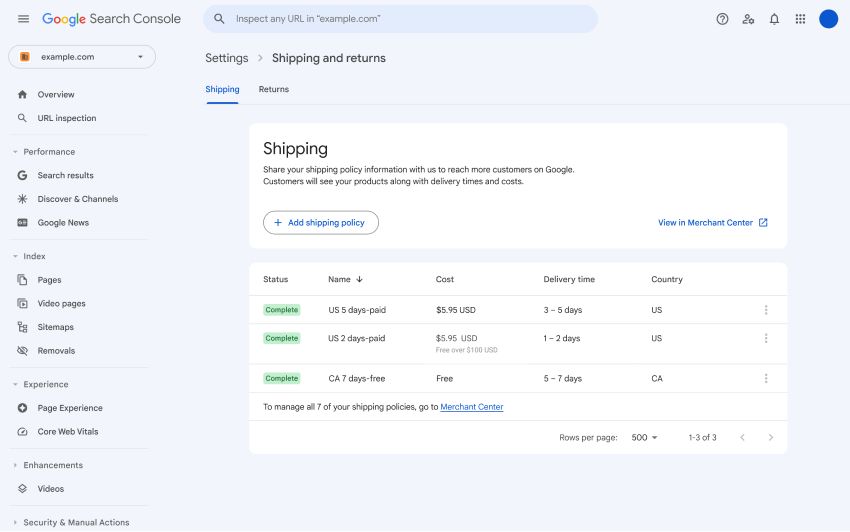
Google now makes it possible to enter shipping and return policies directly in Search Console. This means you can communicate delivery times and return terms to Google without creating or maintaining a Merchant account.
Benefits:
- Clearer information for potential customers
- Increased credibility in search results
- Potentially more clicks to the shop
For small shops without GMC, this is a significant simplification – and an opportunity to stand stronger in search results.
3. AI-powered configuration and analysis in Search Console
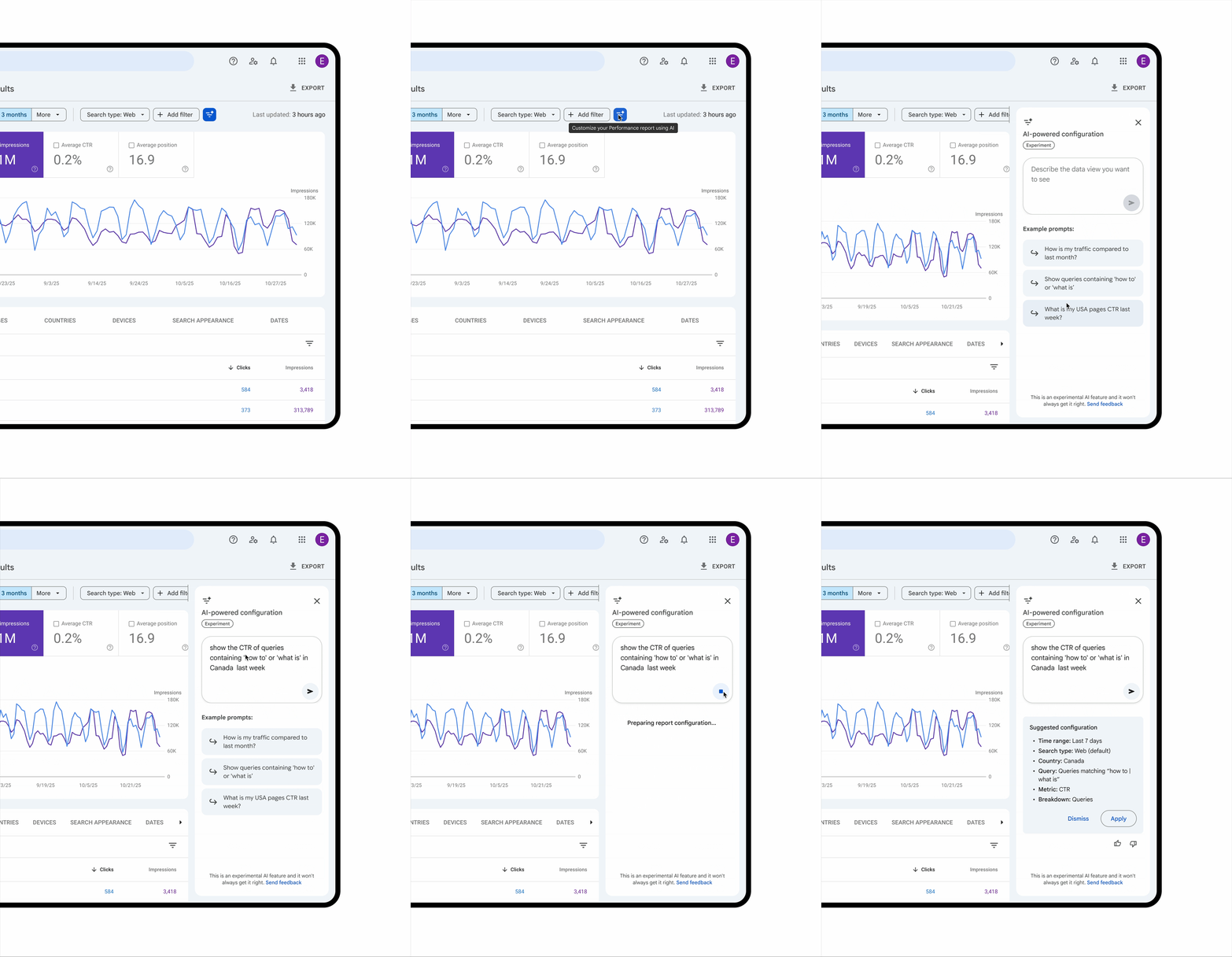
Google is now testing an AI-driven feature directly in Search Console, where you can ask questions about your data – and let the system build filters and analyses for you.
The feature is still limited:
- Max. 20 queries per day
- Only available to a portion of accounts
- Relatively basic interpretations at first
But the potential is enormous. It will become far easier to get quick insights without exporting data or building advanced reports.
4. Custom chart annotations – add notes directly to your graphs
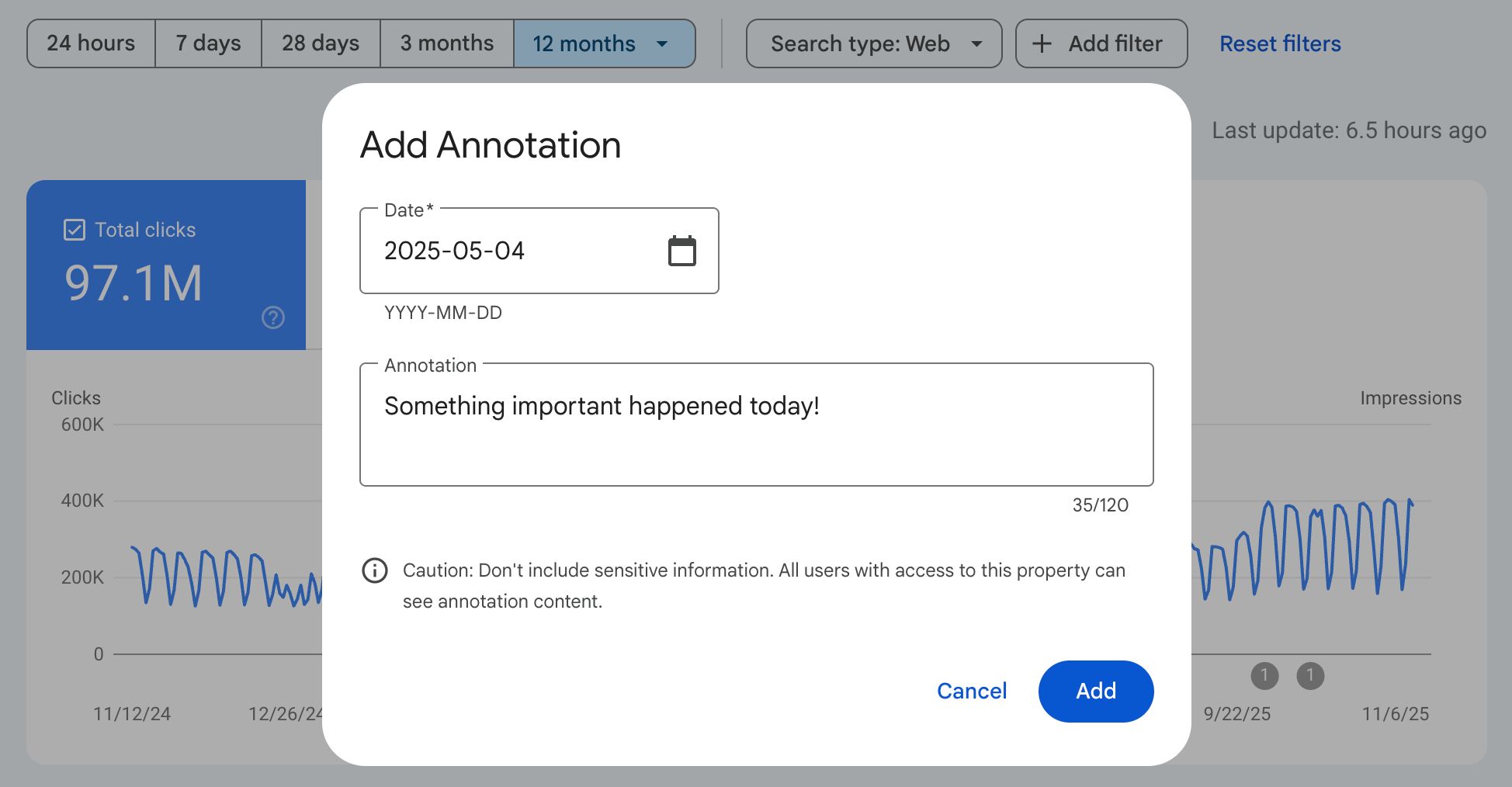
You can now finally annotate your performance graphs in Search Console.
This means you can add notes at the points in time when, for example:
- structural changes were made
- technical optimisations were implemented
- new content was published
- external events occurred
The annotations are at account level rather than page level, and there is a cap of 200 notes per account. Even so, the feature is a great help for documenting cause-and-effect relationships in SEO work.
Conclusion: Search Console is moving – and that is good news for SEO
It is positive to see how Google, after several years of stagnation, is beginning to develop Search Console at a pace that matches the needs of modern marketing teams.
The new features strengthen both analysis, documentation and the understanding of what drives organic traffic. At the same time, they make it easier to collaborate across disciplines – something we at Searchmind already focus on in our knowledge sharing and planning ahead of busy periods like Black Friday


