
What you need to do now
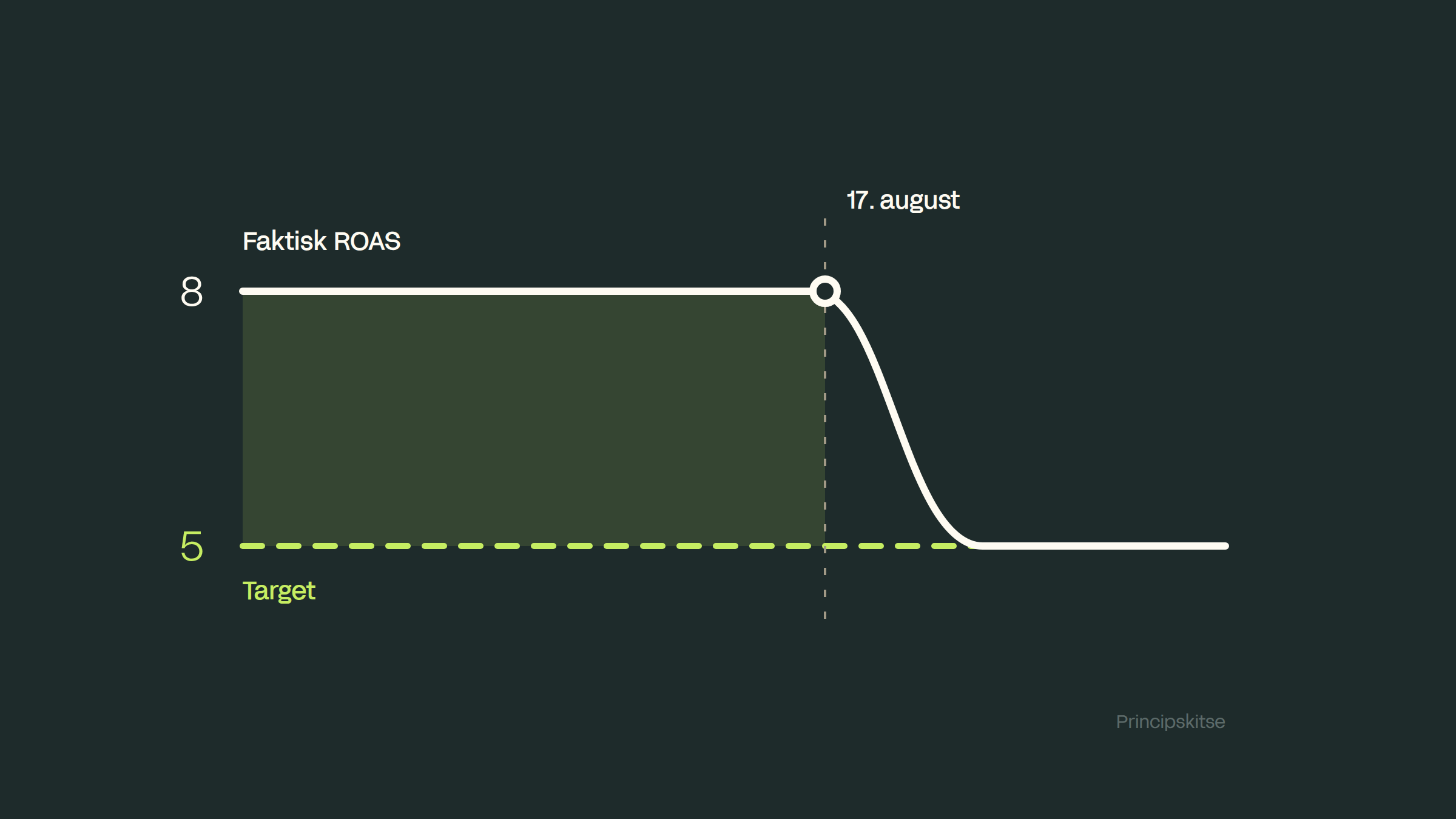
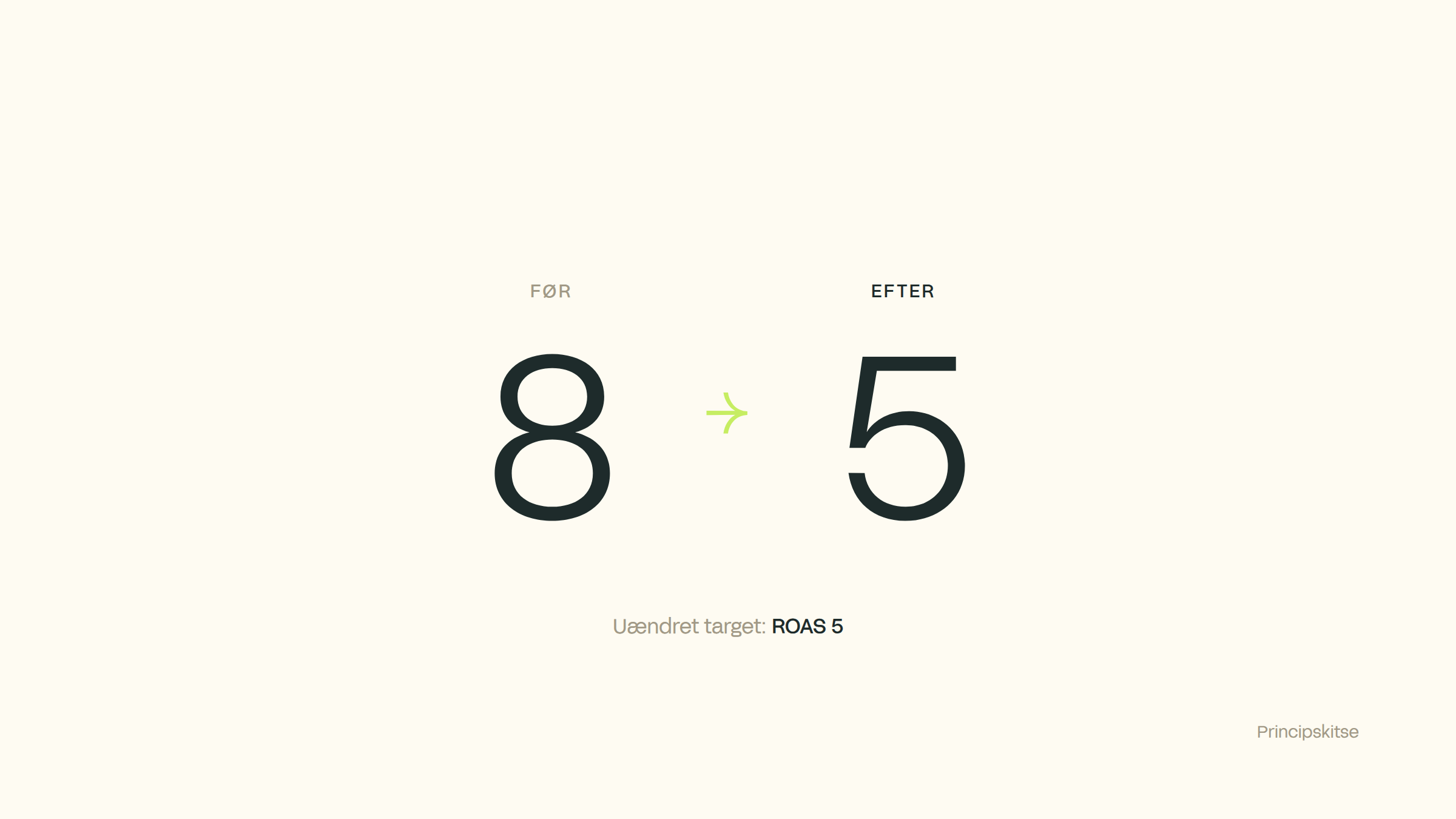
From 17 August 2026, budget-constrained campaigns with Target ROAS and Target CPA will deliver against the target you have set, rather than better than it. If your campaign has been delivering ROAS 8 on a target of 5, you can expect 5 going forward.
This is not a bug, and it is not something that will go away. It is a change in how bidding works, and it shifts the responsibility for your efficiency from the algorithm onto your targets.
What specifically changes
Until now, targets have functioned as a ceiling. If you set a Target CPA of 100 DKK and the system could buy the conversion for 60 DKK, you got it for 60 DKK. Particularly in campaigns where budget was the real constraint, Google often delivered significantly better than the figure entered in the field.
After 17 August, Google will instead optimise towards the number. Google states itself that campaigns currently performing more efficiently than their targets may see performance move towards the set target.
With the same spend, the example on the right means less revenue. With the same revenue goal, it means more spend. Either way, it shifts your channel economics — and for most advertisers, this happens without anyone having touched a single setting.
Who is affected
The change affects campaigns where two things are true at the same time: you are using a target-based bidding strategy, and the budget is the real constraint.
Bidding strategies: Target CPA and Target ROAS.
Campaign types: Search, Shopping, Performance Max and Demand Gen. Google also mentions Travel, Hotel and Display. Check Google's own overview if you are running campaign types outside the first four.
Not included: App campaigns and video reach and video view campaigns.
Important condition: Campaigns that are not budget-constrained are not affected.
That last point is worth pausing on. If you have campaigns that have been hitting the budget cap every day, those are the ones to look at first. They have in all likelihood been the ones that looked best on paper.
Why this is a business case, not a technicality
Many accounts have over the years been built around a behaviour nobody put into words: that you could set a target that was safe and count on getting something better. That buffer has acted as an invisible safety margin in budgets.
That margin is now disappearing. This means that the figure you have in the target field is, going forward, the figure you will get. And if that figure was set eighteen months ago, by someone other than the person managing the account today, based on a margin that has changed since then, this is the moment it becomes costly.
There is also an upside worth noting. When performance becomes more predictable, it becomes easier to scale budgets without efficiency suddenly slipping. Google highlights this as the very purpose of the change. But the upside requires that your targets actually reflect your business.
The checklist we run accounts through
Find the budget-constrained campaigns
Filter by target-based bid strategies and see which ones are genuinely limited by budget.
Compare the target against actual performance
At least one full conversion cycle, so you can see the real gap — not just a random week.
Take a position on each target
Is the number a deliberate business goal, or is it an old figure no one has touched?
Review the budgets at the same time
A target that no longer delivers changes the equation for where the budget does the most good.
Monitor closely over the coming weeks
Both CPA and ROAS, but also CPC, conversion volume and traffic quality.
The four options Google gives you
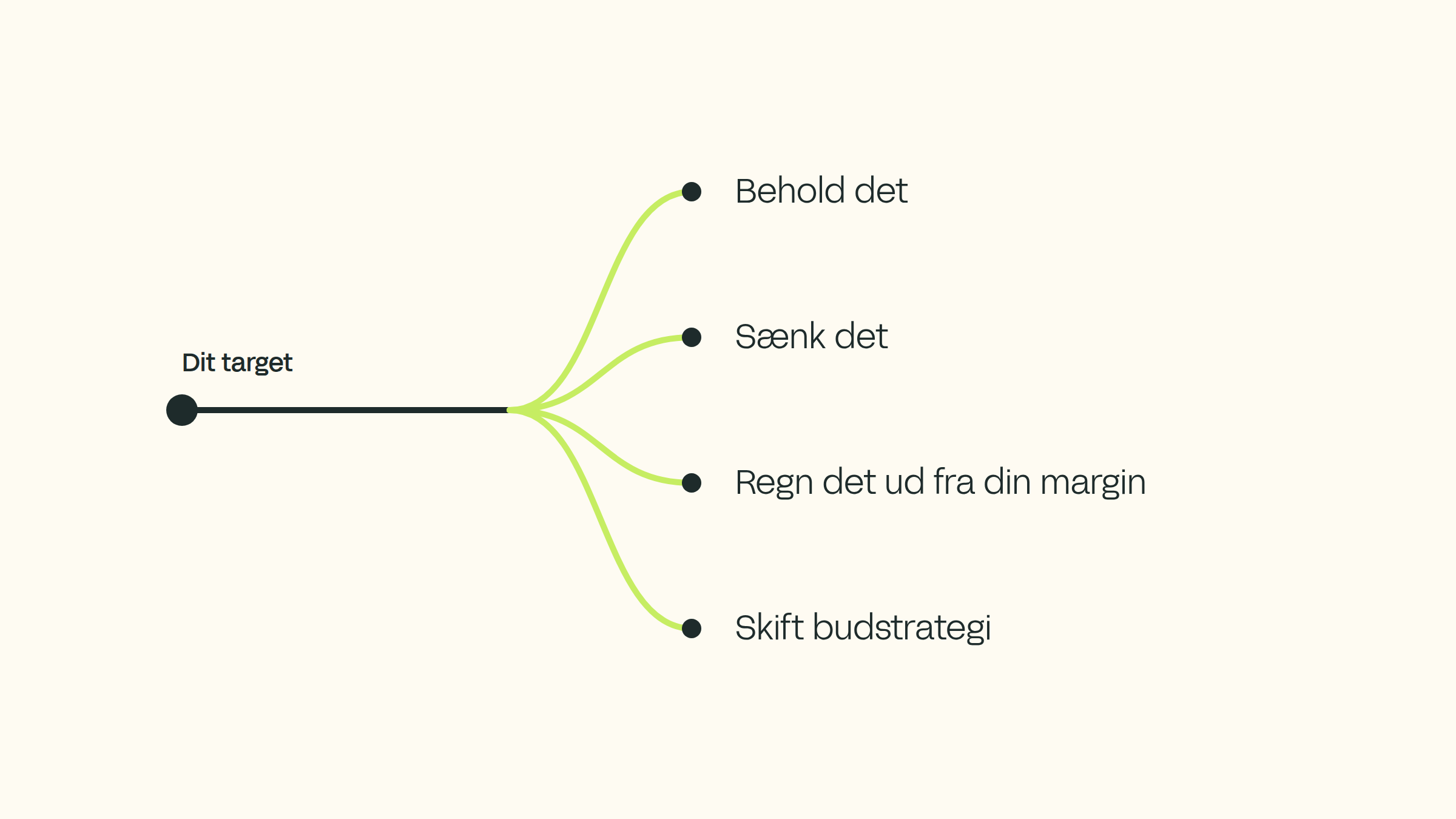
This makes sense if the figure already reflects your actual break-even or desired profitability. You will now get what you have been asking for all along — and likely more volume for your money.
Relevant if you have been used to overperformance and want to maintain efficiency. Since 6 July 2026, Google has made a Bid Target Adjustment Tool available specifically for this purpose.
The best approach for most. Work backwards from your contribution margin rather than from what the account has historically delivered. A target set without knowledge of your margin is simply a guess.
Maximise Conversions or Maximise Conversion Value may be the answer if volume within a fixed budget is what matters, and efficiency is managed elsewhere.
What we are keeping a close eye on
When the system is allowed to use the full room the target provides, there are some side effects worth watching for in the coming weeks:
Rising CPCs. A higher effective target can mean bidding more aggressively than necessary.
Broader and lower-quality traffic. Room within the target may be used on clicks that were previously filtered out.
Secondary metrics slipping. Conversion rate, average order value and the share of new customers can shift, even when CPA or ROAS looks reasonable.
And then there is the point this change underlines more clearly than anything else: when all accounts run on the same automated terms, and the algorithm no longer gives anyone free efficiency, the difference between success and failure lies elsewhere. It lies in the margin, in the product, and in the ads and creatives you feed the system. The algorithm is good at figuring out who should see the ad. It still has no idea why they should buy from you specifically.


