First-party data is the key to personalised marketing
First-party data from your customers' email and website interactions is a powerful tool that can improve personalisation, targeting, and the effectiveness of marketing activities across different channels.
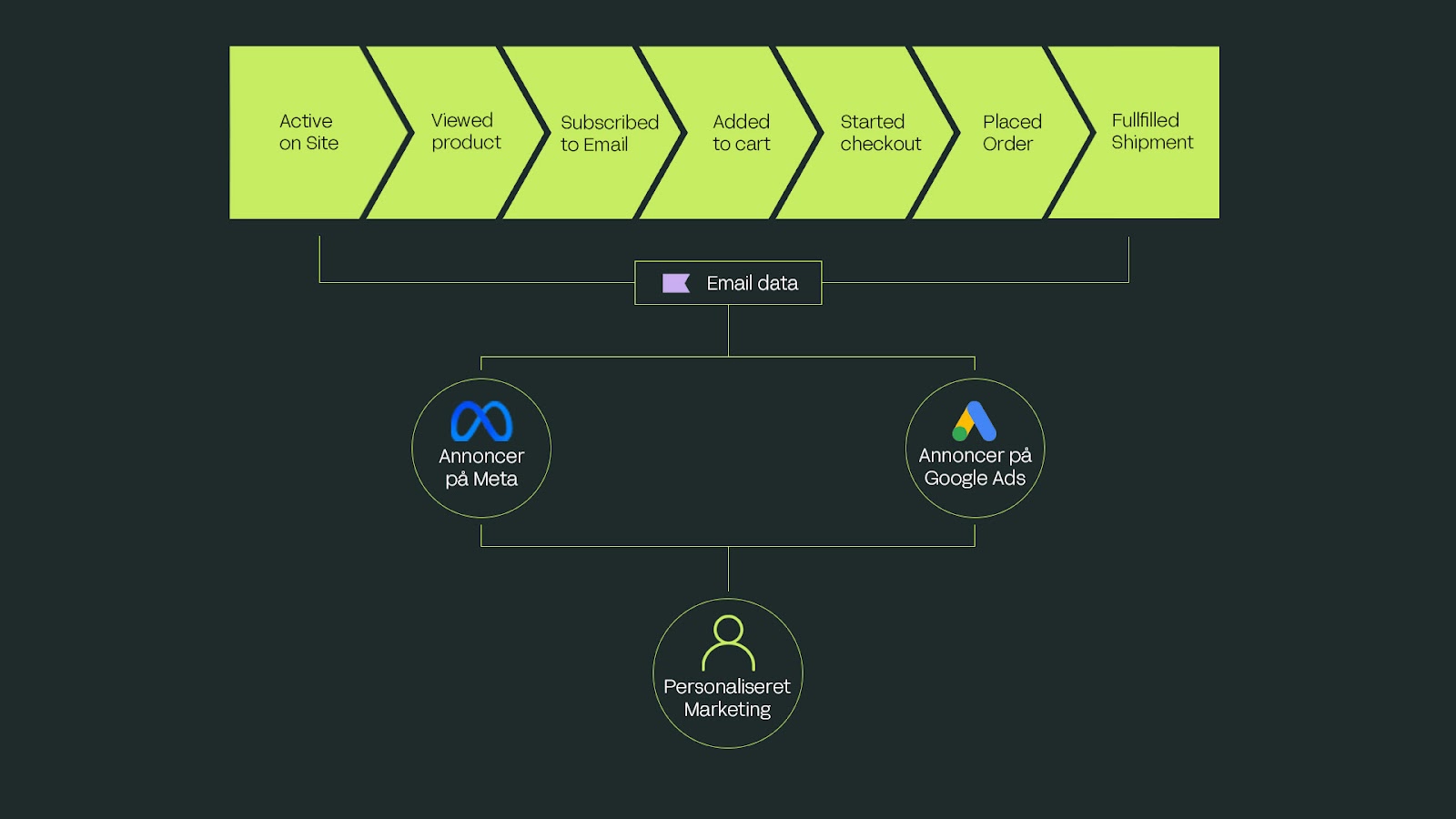
Personalised ads
Data from email and website interactions, such as which products customers engage with, can be used to create targeted ads on social media and other platforms. For example, segments of customers who have shown interest in specific products can be targeted with ads for those products.
Segment synchronisation
Segments created in email marketing platforms can be synchronised through built-in integrations that set a new standard for how you build your audiences. This makes it possible to create lookalike audiences and reach new potential customers with similar interests and behaviours.
Performance-driven cross-channel strategies
First-party data from emails can play a central role in amplifying messages across channels and improving performance at campaign level. If a particular campaign generates a high degree of engagement in emails, that campaign can be extended to other platforms such as social media to increase both impact and create consistency between channels.
Emails are a 'free' channel, making them ideal for gaining insight into how different campaigns perform with your target audience. A data- and performance-driven approach to your marketing setup ensures that you maximise the potential of your marketing activities across channels.
Trigger-based campaigns
A well-functioning integration between your ESP and your webshop makes it possible to set up automated flows at critical touchpoints, based on subscribers' position in their customer journey. These trigger-based campaigns are highly effective, as they are activated by specific actions or events, such as a visited product page, an abandoned shopping cart, or a completed purchase transaction.
By using dynamic content, you can target and personalise emails so that they are unique for each individual subscriber. This not only increases relevance for the recipient, but also engagement and conversion rate. For example, an email triggered by an abandoned shopping cart can include the exact products the customer was considering purchasing, as well as incentives such as discounts or free shipping.
These insights and data from email interactions can quickly become essential to your wider marketing strategy. They can be used to drive more personalised and relevant ads across Google Ads, Meta, and other paid advertising channels. By leveraging first-party data from emails, you can fine-tune your ads to reach the right audiences at the right times with messages that resonate with their needs and behaviour.
Data analysis
When you take a critical look at your data, you can tailor unique campaigns that resonate best with customers. In email marketing, it is important to analyse open rates, click-through rates, conversion rates, and unsubscribe rates to understand what works and what does not. By segmenting your email list based on these metrics, you can target content more precisely, increasing relevance and engagement.
A/B testing
Furthermore, A/B testing of different subject lines, content, and calls to action can provide valuable insights into which elements drive engagement and conversions. For example, you can test different subject lines to see which results in higher open rates, or different images and copy to see what generates more clicks.
Cross-channel optimisation
This insight can then be applied to optimise campaigns across all marketing channels. By transferring the learnings you gain from email marketing to other channels such as social media, PPC advertising, and content marketing, you can ensure a coherent and effective marketing strategy. For example, you can use the most effective subject lines from your emails as headlines in your ads, or the best-performing images as visual elements in your social media ads.
Continuous analysis and optimisation of your data ensures that you are always working with up-to-date and relevant information, which is essential for remaining competitive and relevant.
Retargeting existing profiles
You can use the segments you already use in your email marketing efforts to include and exclude profiles in your ad sets when using retargeting. This way, you can create effective ads for:
- Targeting customers who have initiated a checkout within the last 7 days but have not placed an order, with an ad that reinforces the message or discount from your abandoned cart flow, can reactivate potential buyers.
- Winback so that popular trending items are highlighted to re-establish customers' interest.
- Re-engaging inactive subscribers with relevant ads showing items they have viewed on your website, or time-limited campaigns, can reactivate their engagement. It can also involve special campaigns targeted at interested recipients.
- Cross-selling by targeting customers who have purchased one product with a complementary product can increase AOV.
- Targeting new customers who have visited your website but never purchased can encourage first-time purchases.
- Cross-channel strategy by targeting those you already reach via email with relevant ads that reinforce the message and have a similar call to action can create a more coherent customer journey.
- For customers who have purchased recently but not frequently or at a high value, you can focus on increasing their purchase frequency or average order value by promoting bestsellers and popular products.
- Lookalike segments to grow the list with lead ads. By using your existing customer data, you can create lookalike segments that identify potential customers similar to your current ones. These segments can then be targeted with lead ads designed to collect contact details from potential customers directly from the advertising platform. This approach makes it possible to reach a broader yet still relevant audience that is likely to be interested in your products or services, effectively helping to grow your email list and generate more leads.
This way, you ensure that customers are engaged precisely where they are in the customer journey, leading to an increased conversion rate.
The value of email marketing and first-party data across platforms
The use of email marketing and the data generated on this channel creates great value across marketing channels by:
- Improving targeting and personalisation: Data from your email marketing platform can be used to create targeted ads on social media and other platforms, increasing relevance and engagement.
- Creating consistent messaging: Data from your email marketing platform can help ensure that messages are consistent across channels, strengthening brand identity and the customer experience.
- Optimising campaigns: Analysis of data from your email marketing platform provides insight into customer behaviour and preferences, which can be used to adjust and improve campaigns across all channels.
- Increasing the effectiveness of paid ads: By using segments from your email marketing platform to create lookalike audiences on platforms such as Facebook and Instagram, you can better reach potential customers with similar interests. This way, you have a greater likelihood of reaching the recipient with a message that is relevant to them specifically.
- Strengthening the customer journey: Cross-channel strategies, where customers receive relevant messages through multiple channels, increase the likelihood of conversion and create a more coherent and engaging customer journey.
By creating an integration between your ESP and webshop, you get the most out of your marketing efforts. This is because you gain the ability to leverage email data to improve the performance and effectiveness of your overall marketing mix.


