What is email deliverability?
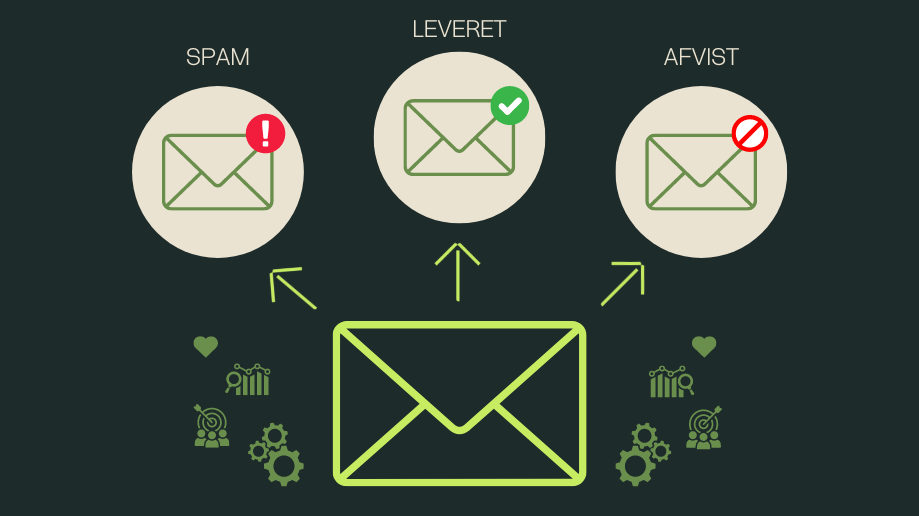
Email deliverability refers to the ability to ensure that emails reach the recipient's inbox rather than ending up in the spam filter. High deliverability impacts your effectiveness, customer loyalty and sales results. When emails fail to arrive, valuable time, resources and potential revenue are lost.
To ensure your emails reach recipients and contribute positively to your business goals, it is important to create relevant and engaging content and avoid elements that can trigger spam filters. Measures such as IP warming and regular list hygiene also play a central role.
It is also important to understand and adapt to email providers' general requirements for email deliverability. This includes correctly implementing authentication methods such as SPF, DKIM and DMARC, which help maintain a good domain reputation and improve delivery security.
With a focused strategy on content, technical configuration and email list maintenance, you can improve your email deliverability, maintain a strong reputation and optimise the effectiveness of your email campaigns.
How do you ensure high deliverability?
To ensure your emails reach the recipient's inbox, it is important to send them from your own domain. When you use your own domain, you have better control over how your emails are perceived and handled by email providers. A good reputation for your domain plays a major role in whether your emails land in the inbox or end up in the recipient's spam filter.
1. Focus on the quality of your email lists
High quality in your email list is essential for good deliverability. This means your list consists of valid and engaged recipients who look forward to receiving your content. Poorly maintained email lists increase the risk of ending up in the spam filter.
This is because email providers assess the credibility of your sender domain based on your previous sending behaviour — including whether there have been high bounce rates (emails that are not delivered due to invalid email addresses or similar), spam complaints and recipient engagement.
To avoid these issues, it is important to update and clean your email lists regularly. Remove inactive recipients and addresses that frequently bounce to keep list quality high.
2. Produce quality content
The content of your emails is another decisive factor in whether they are delivered to the inbox. To ensure a high delivery rate and avoid spam filters, you should focus on the following aspects:
Language: Use clear, professional and understandable language. Avoid excessive use of capital letters and punctuation, as this can give the impression that the email is spam. Ensure your message is worded in a way that appears credible and relevant — and make sure there is a consistent thread in the communication style and tone across sends.
Links: Ensure all links are relevant and point to reliable sources. A high concentration of links can increase the risk of the email being perceived as spam. Regularly check that all links work correctly and lead to relevant landing pages.
Relevance: Emails with low open and click rates risk being filtered out and ending up in the spam filter. Use data on the recipient's previous interactions, interests and preferences to create content tailored to their needs. This can be based on the subscriber's purchase history, behaviour or specific interests. The more relevant and engaging the content, the higher the likelihood of a positive response from recipients.
Automation: Use automation to send emails at the right time with the right content, tailored to the recipient. Automation ensures your emails reach recipients in a personalised way and at the most appropriate time.
3. Stay on top of technical requirements
The latest technical configuration requirements from major providers such as Gmail, Yahoo, Microsoft and Apple reflect a tightening of security and delivery standards that are regularly adjusted. Some of the newest changes include stricter requirements for DMARC policies and authentication with SPF and DKIM, as well as a greater emphasis on engagement-based filtering and IP Warming.
Let us start by defining what the technical terms mean:
- DMARC (Domain-based Message Authentication, Reporting, and Conformance): DMARC helps define what should happen to emails that fail authentication via SPF or DKIM. It allows you to specify policies for how emails that appear to come from your domain but are not correctly authenticated should be handled. In addition, DMARC provides reports on how emails from your domain are treated by the recipient's email servers.
- SPF (Sender Policy Framework): SPF is a method for verifying that an email comes from an authorised server for your domain. It works by specifying in the domain's DNS records which IP addresses are permitted to send emails on behalf of your domain. This helps prevent spoofing, where an email appears to come from your domain but actually originates from another source.
- DKIM (DomainKeys Identified Mail): DKIM adds a digital signature to the email that the recipient's server can use to verify that the email's content has not been altered and that it genuinely comes from the domain specified. The signature is generated using a private key, while the public key is found in the domain's DNS records so the recipient can verify the signature.
- IP Warming: IP Warming is the process of gradually increasing the volume of emails sent from a new IP address or new sender domain. The goal is to gradually build a positive reputation. IP Warming involves starting with a small volume of emails and gradually increasing the volume over time.
As recently as 2024, several email providers including Google (Gmail), Microsoft (Outlook) and others have updated their deliverability requirements on their platforms. These updates require you to continuously monitor and adjust your technical configuration to avoid emails ending up in spam filters or being rejected entirely. Here is a list of requirements that apply to most major email providers:
DMARC policy: Requirements for DMARC policies involve demands for strict “p=reject” settings. While this can improve user security against phishing and spoofing, it can also cause your legitimate emails to be rejected if the configuration is not entirely correct. Changes to DMARC settings must therefore be made with care, as they can affect your entire organisation's email infrastructure.
Authentication with SPF and DKIM: Correct configuration and maintenance of SPF and DKIM is now an unavoidable requirement from all major providers, including Gmail, Yahoo, Microsoft and Apple. Errors in the configuration can result in your emails being rejected or going directly to the spam filter, because your emails cannot be DMARC-verified.
IP Warming: The requirement for IP Warming makes the process of sending emails from new IP addresses or new sender domains more complex. This gradual increase in sending volume can take time and requires close monitoring to build a good reputation. Inadequate IP Warming can lead to rejected emails or landing directly in the spam filter.
4. Monitor and analyse your email performance
To ensure your emails reach recipients and contribute to your business goals, it is essential to monitor and analyse delivery data closely. Modern email service providers (ESPs) offer advanced reporting tools that can help you understand how your emails are performing. Here are some important metrics you should focus on, and how you can use them to identify and resolve issues:
Bounce rate: Bounce rate shows how many of your emails were not delivered to the recipient's inbox. A high bounce rate can indicate problems with the email list, such as invalid or inactive addresses. To reduce bounce rate, you should regularly clean your list and ensure you are only sending to valid addresses.
Open rate: The open rate shows how many of your recipients open your emails. A low open rate may indicate that your subject line is not sufficiently engaging, or that your emails are ending up in the spam filter. Consider testing different subject lines and optimising content to increase relevance and appeal.
Click rate: The click rate shows how many recipients click on links in your emails. A low click rate may indicate that your content is not relevant or engaging enough. Ensure your emails contain clear CTAs and valuable content that motivates recipients to interact.
Spam complaints: Spam complaints show how many recipients have marked your emails as spam. A high rate of spam complaints can have a negative impact on your domain reputation and email deliverability. Ensure it is transparent what your subscribers can expect from your emails, so you make sure they are relevant to the recipient. Also ensure that you gather information about recipients' preferences and have obtained permission to send emails to them.
Summary
Email deliverability is a complex but critical part of your email marketing strategy, covering both technical aspects and the nurturing of customer relationships through the email channel. With the constantly changing requirements and updates from major email providers, as well as the shifting needs of your recipients, it is essential to stay informed and adapt to the latest standards.
By investing time and resources in understanding and adapting to the latest requirements, you can avoid common pitfalls and optimise your email marketing. This will both improve your delivery rate and strengthen your brand and relationships with recipients. So be proactive and stay up to date with the latest changes, so your email strategy continues to deliver strong results for your business.


