What is gamification in email marketing?
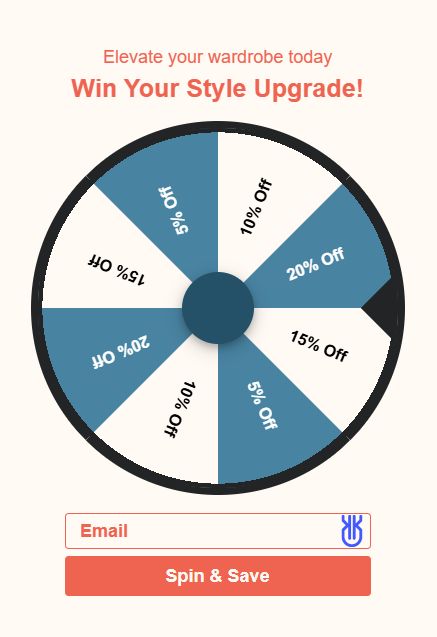
Gamification means using game elements to engage users. In email marketing, this can involve making the sign-up process more interactive – for example with a spin wheel, quiz or scratch card.
In early 2025, Klaviyo launched the Spin-to-Win feature, which makes it easy to embed a digital spin wheel directly in the signup form. The user submits their email address in exchange for a chance to win a prize that you define yourself.
As the sender, you control the probability of winning each prize. So it's not entirely random – but it does make it possible to balance high incentive with profitability.
Why does it work?
Gamification works because it activates users' curiosity and competitive instinct. "Spinning a wheel" feels like an experience, and the chance of winning creates extra motivation to sign up.
Benefits of gamification in signup:
- Increased sign-up rate – on average up to 15% more sign-ups.
- Fun experience – signing up feels more like a game than a form.
- Control for the sender – you decide on prizes and probabilities.
What do the first tests show?
I have already tested Spin-to-Win with some brands, where the results have been promising – with higher sign-up rates than traditional forms.
But there is an important "but":
Keep an eye on the quality of the leads you acquire. Many people love competitions, but they are not necessarily ready to buy or engaged in the long term.
Therefore I recommend:
- A/B testing with and without gamification.
- Tracking engagement developments over time.
- Evaluating whether the new leads convert into real customers.
Is gamification right for all brands?
No – and that's precisely the point. If you have an audience that loves play, experiences and competitions, gamification can be a powerful method for increasing sign-ups. If you run a more serious B2B brand, it may not be the right fit.
Conclusion
Gamification – and particularly Klaviyo's Spin-to-Win – can be a fun and effective way to increase newsletter sign-ups by up to 15%. But it is important to balance hype with quality: test, measure and assess whether it also creates value in the long run.
Would you like to try it?