CSS as a Solution for Optimising Google Shopping Campaigns: Are the Savings Realistic?
In recent years, CSS (Comparison Shopping Service) has been highlighted as a potential solution for advertisers looking to optimise their Google Shopping campaigns and achieve savings of up to 20%. Many have claimed that using a dedicated CSS could significantly reduce CPC (cost-per-click) compared to Google's own CSS solution. But how realistic is this claim?
To get a clear picture of the effect of CSS, we conducted an extensive test with 63 clients using both CSS solutions on Google Shopping. The test focused on comparing the average CPC for both CSS and Google's CSS solution, and here is what we found.
Test Results
Although several clients have experienced savings by using CSS, the test results show that the average savings were only around 3%. This is far less than the promised 20% savings that many advertisers had expected.
There were, however, individual cases where savings reached as high as 47%. These cases were exceptions, and not something one can expect as a standard outcome.
A Closer Look at the Average
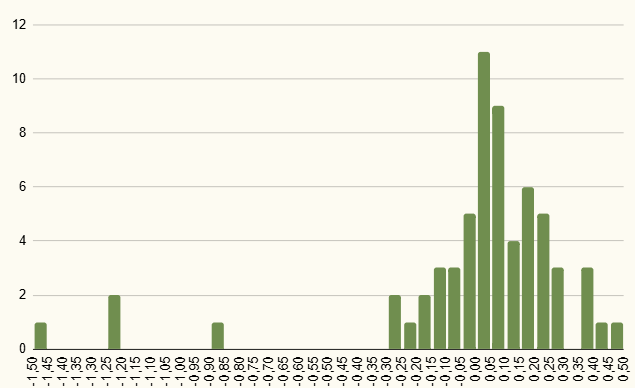
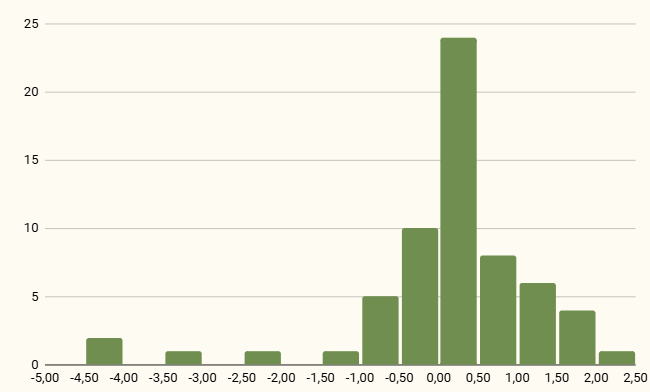
Looking at the 63 accounts we tested, 24 of them had an average saving of between 0–0.5 DKK per click. The average saving in percentage terms ranged between 0.0% and 10.0%, with half of the clients experiencing savings below 5%.
To visualise the test results, we have created two charts showing the distribution of CPC savings:
In this first chart, we can see that the majority of clients achieved small savings (between 0.0% and 10.0%).
In the second chart, it is clear that savings varied considerably, but there were more instances of very low savings, while few experienced higher savings.
Is CSS Worth Choosing?
Although there are individual cases where CSS has proven to be a financial advantage, the average saving is so low that switching is not necessarily economically beneficial for all clients. The promised 20% savings often cited are therefore not necessarily realistic for everyone, and it is important for advertisers to evaluate their own results and needs.
For those looking to optimise their Google Shopping campaigns, choosing CSS is therefore not always the best solution. It is important to consider all factors, including the specific results achieved within your own business, and compare these with alternatives such as Google's CSS.
Conclusion
While CSS can offer savings for some, our test shows that the average savings are far less than the 20% often claimed. For many clients, Google's CSS will continue to be the more cost-effective solution, especially when looking at the overall CPC. It is important to evaluate your own situation and choose the solution that makes the most sense for your business.