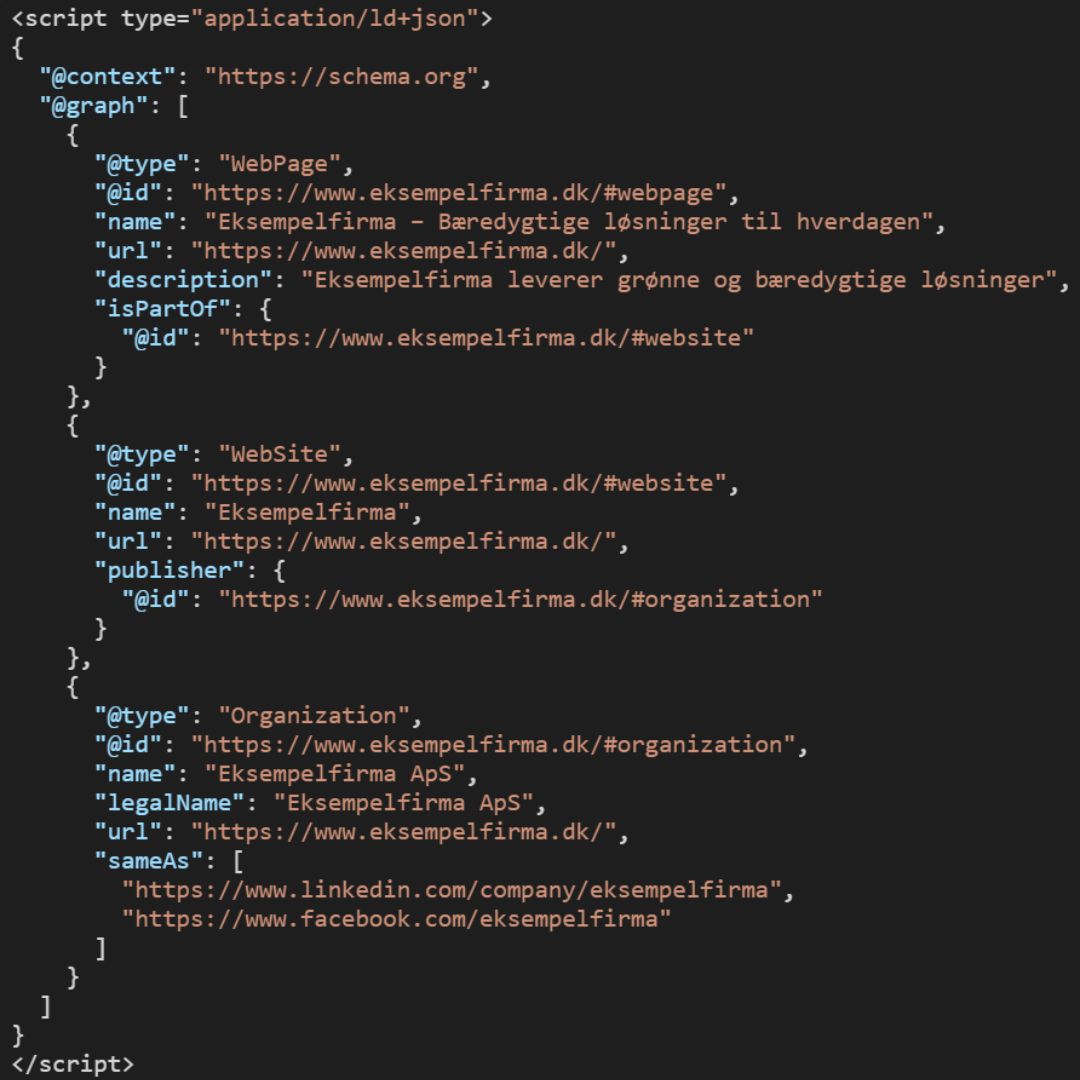
Time and again I see websites missing schema markup on their most important page – the homepage. Typically, plugins like Yoast or other CMS defaults are used, but they are often either not implemented correctly or lack populated data.
I believe that structured data plays a major role in future visibility – both in search engines and in AI tools. SEO and GEO (Large Language Models) go hand in hand in my view.
Here are the three most important Schema.org types that every homepage should include – and why:
WebPage
- Tells Google that this is an actual webpage – not just a document.
- Allows you to add context, e.g. which products and services the page covers – something both search engines and LLMs use to understand content.
WebSite
- Used to identify the entire site as an entity, including name and URL.
- Google pulls the site name from this type for search results – an important opportunity to ensure brand visibility and consistency.
Organization
- Describes the company behind the website – e.g. name, legal name, IDs and social media.
- Increases credibility, creates connections between entities and contributes to a strong knowledge graph.
The crucial part is that these types are correctly linked to each other:
WebPage → isPartOf → WebSite → publisher → Organization
When done correctly, your homepage is no longer just “a page” – it becomes a semantic hub for both SEO and AI.
If you want sparring on setting it up correctly in JSON-LD or would like to see concrete examples, feel free to contact us.
Below are some basic examples for inspiration:
- WebPage: https://schema.org/WebPage
- WebSite: https://schema.org/WebSite
- Organization: https://schema.org/Organization