The value of email marketing
Email marketing is a vital component in the race to establish a strong brand presence with your customers, while also setting you apart from competitors. It is therefore advantageous to view your email marketing as an extension of your brand — both visually and communicatively — so you maintain a consistent red thread throughout all outgoing communication.
Your emails should radiate such strong brand recognition that your logo becomes virtually redundant. This is how customer loyalty and credibility are built.
Three disciplines that improve your performance
Your performance work depends on:
- How you communicate with your subscribers through relevant campaign emails.
- Tailored flow emails.
- Your focus on converting new visitors into subscribers through lead generation.
A holistic interplay between these three disciplines provides an advantageous foundation for achieving greater success with email marketing.
It is worth noting, however, that each individual discipline contains a wealth of opportunities and guidelines that you should follow when aiming to create a great experience for recipients and act in accordance with section 10(2) of the Marketing Practices Act.
A cost-effective channel
Your email marketing channel is owned by you and unique to your brand. This makes it the most cost-effective channel in your marketing mix, because your costs associated with email marketing consist solely of:
- Your email marketing software (ESP), such as Klaviyo, MailChimp, or ActiveCampaign.
- Resources spent internally or externally on setting up campaigns, flow emails, accounts, and detailed segments.
In this way, you have no ad spend associated with your email marketing channel, but pay directly to your ESP, where the pricing model often depends on the number of active subscribers and the number of emails sent per month. If your ambitions for the channel extend beyond standard practice, we recommend supplementing with systems such as:
- Sleeknote, if you want increased gamification or an extra layer in your lead generation.
- Data Feed Watch, for e-commerce businesses working in Magento 2, Dandomain, and Shopware, where prices in dynamic elements are not always accurate.
- Lead Ads through Meta, which capture subscribers outside your website, based on the value you offer new subscribers when they sign up. This could be, for example, 10% off the first order, an exclusive club membership, or something else entirely.
Depending on the complexity and size of your email marketing setup, cost will naturally play a larger role, but fundamentally email functions as an easily accessible channel if you want to drive increased customer loyalty and conversions. Once you have built a solid base of engaged subscribers, you will typically need significantly fewer resources to get them to buy again — as a result of customer loyalty — thereby achieving an attractive ROI.
A strategy that makes sense
A well-orchestrated strategy is the cornerstone of email marketing. Because it is so easy for your subscribers to unsubscribe from your emails, the focus should be on feeding recipients with relevant content that creates value in the inbox. This can include personalised messages, news, offers, or special campaigns for interested parties.
Factors of strategic importance for campaign emails
To create a meaningful strategy that delivers the desired results for campaign emails, the following factors must be taken into account:
- Segmentation and personalisation: Use your available data on individual subscribers to create targeted content.
- Metrics: Consider which metrics and touchpoints are available in your current integration.
- Seasonal relevance: Take advantage of relevant seasons or sales periods such as Black Friday, so you reach customers with timely messaging. Read more about how to get your email strategy ready for Black Friday here.
- Continuity: Create an overall plan with themes that make sense in relation to your brand, while also catering to exactly what your subscribers are keen to receive in their inbox.
With these considerations in place, you ensure that your subscribers stay engaged because your content feels relevant and well thought-out.
Personalisation as the primary focus
Working with personalised content is a focus you should prioritise when aiming to work effectively with email marketing. This allows you to create unique customer experiences with tailored product recommendations and hide/show logic that feels meaningful to the individual subscriber. To work purposefully on differentiating your communication, you can use parameters such as:
- Action-based. Has the subscriber made a previous purchase or not?
- Engagement-based. Has the subscriber opened emails in the last 90, 60, or 30 days?
- Gender. Does the subscriber find the greatest value in gift-giving or treat-yourself messaging?
- Loyalty. Is the subscriber a loyal customer who keeps coming back? If so, make sure to let them know you appreciate them. It pays to further strengthen your relationship.
The above should be seen as examples of segments you can use in campaign emails. If you do not have the resources to send out 10 different versions of a newsletter, we recommend incorporating segments into a flow setup instead.
A tailored communication journey
When working with email flows, it is necessary to tailor a communication journey that is triggered by different metrics depending on how visitors behave on your website. This creates strong personalisation opportunities, because your integration provides data insights via your chosen ESP, giving you visibility into what users have browsed, added to their cart, or purchased. This provides a strong foundation for behavioural analysis and identifying key touchpoints, making it possible to engage each individual subscriber right where they are in the customer journey.
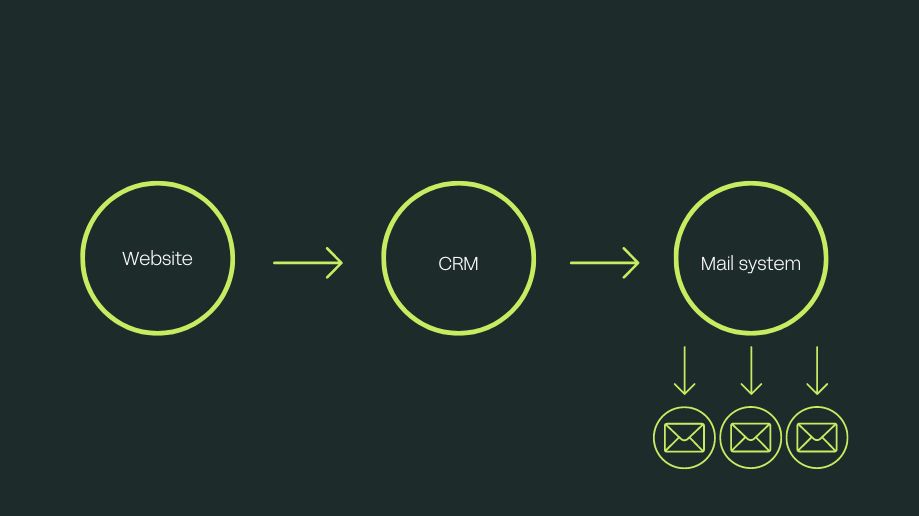
A low-hanging fruit to harvest can be, among other things, sending an email to a subscriber who has viewed a product on your website. Your ESP receives this information and then sends an email after an hour or two with a reminder about that specific product or similar products. This naturally requires a flow setup that is triggered when potential customers take such actions.
From your e-commerce integration, events are fed into your ESP, providing you with data about your subscribers. This can include which products they have viewed, purchased, or had in their cart, and generally which product categories they show interest in. This provides a basis for automating emails that take into account how far along each individual subscriber is in their buying journey and how purchase intent can be stimulated through emails. Engaging subscribers where they are requires a strategy — a journey mapping exercise that gives you the best conditions for achieving conversions with the relevant subscribers.
Furthermore, it is important to have a clear strategy for what you want to use email marketing for and which KPIs you want to measure success by. To support this, you can identify a few winning metrics to work from. Examples of this could be placed orders, revenue per recipient, or something else entirely. Set ambitious goals — it is not unrealistic to aim for 25% of your total revenue being attributed to email marketing.
Choose the right email marketing platform
We often see businesses start their email marketing efforts on the well-known platform MailChimp. There is nothing wrong with that, but if you have ambitions to invest seriously in email marketing, switching platforms can become a costly affair once you want to tailor your efforts to your specific needs and objectives. A switch from MailChimp to another email marketing platform may become necessary, as this platform comes with limitations.
When choosing an ESP, you should consider the following:
- The ability to integrate with your CMS.
- The potential for growth.
- A clear dashboard that provides insight into data and performance.
- The ability to tailor messages to your target audience(s).
- The ability to tailor communication to key moments in your subscribers' customer journey.
- The ability to include dynamic content in emails that further personalises the experience.
These various considerations make it possible for you to get closer to the right platform choice for your email marketing. If you want to learn more about different ESPs, you can read more here.
Create structure with a well-orchestrated email marketing strategy
When we begin a collaboration with clients on email marketing, we always start with a thorough dialogue about their needs and resources, ensuring that we create the greatest possible value through the channel.
Whether the goal is to improve the repurchase rate, minimise the unsubscribe rate, increase the conversion rate, reduce the return rate, or address specific organisational challenges, our approach is tailored to meet these unique requirements. This strategic approach not only ensures that internal resources are used optimally, but also that email marketing can become a driver of success in the e-commerce landscape.
Would you like to know more about how we can help you achieve success with email marketing? Find out more here.


