Why video content works best on social media
Video content is one of the most effective forms of content on social media. According to a report from G2 Crowd, videos on social media generate 1200% more shares than text and images combined. Furthermore, data from Wyzowl shows that 86% of businesses use video as a marketing tool, and that 93% of marketers believe video is an important part of their marketing strategy.
Examples of video content success can be seen everywhere. Viral videos on TikTok can reach millions of views within just a few days, while well-produced YouTube videos can build a loyal following that keeps coming back for more. Instagram Stories, Reels, and Facebook Live offer dynamic ways to engage users through short, catchy videos. YouTube Shorts and TikTok have also revolutionised how we consume short-form video, significantly increasing the popularity of these formats.
So how can video ads increase engagement, reach and sales? First and foremost, videos can tell a story in just a few seconds, capture the viewer's attention with movement and sound, and create an emotional connection that is difficult to achieve with other media formats. This increased engagement leads to greater reach, as platform algorithms often prioritise videos that receive many views, likes and shares.
In addition, video ads can generate sales by demonstrating products in use, answering customer questions visually, and building credibility through customer testimonials. Product videos can show details that are difficult to describe in words, and tutorials can help customers better understand the product's value and features. This makes customers feel more confident in their purchase, increasing conversion rates and sales.
Create an effective video strategy for the entire customer journey
We have previously written an article about why it is important to focus on top-funnel to drive conversions in the low-funnel. It is essential to understand that top-funnel ads must differ from low-funnel ads, as the purpose of the content in each phase is different.
Here is an overview of how video ads can be used effectively at each stage of the customer journey:
Top-funnel: Awareness and reach
The purpose of top-funnel ads is to create awareness and reach as many potential customers as possible. Videos at this stage must be catchy and shareable to maximise their reach.
Examples of top-funnel video content include:
- Brand storytelling: Share the company's story and values.
- Viral videos: Create content that is entertaining and easy to share.
- Product introductions: Introduce new products with short, attention-grabbing videos.
Mid-funnel: Engagement and consideration
In the mid-funnel phase, the goal is to engage users and get them to consider your products or services more seriously. Videos here should be informative and educational, helping potential customers understand the benefits of your offerings.
Examples of mid-funnel video content include:
- Product demonstrations: Show how your products work and highlight their unique features.
- Customer cases and testimonials: Share success stories from satisfied customers to build credibility.
- Educational videos: Create tutorials and guides that help users solve specific problems using your products.
Low-funnel: Conversion and sales
In the low-funnel phase, the goal is to convert potential customers into paying customers. Videos at this stage must be persuasive and focused on driving action.
Examples of low-funnel video content include:
- Video ads: Targeted ads that highlight specific offers and calls-to-action.
- Functional demonstrations: Detailed videos showing precisely how to use the products and what to expect.
- Customer cases: In-depth customer stories that show the concrete results others have achieved by using your products.
By differentiating your video content for each stage of the funnel, you can effectively guide potential customers from awareness to consideration and finally to conversion, optimising your chances of success with your social media ads.
How to create a compelling narrative in your videos
To create effective video ads, there are several important approaches you can follow. First and foremost, you should focus on authenticity and relatability. By showing real people and situations in your videos, you can make the content more credible and relatable to your audience. This helps build trust and connection with viewers.
Next, it is crucial to ensure that your message is clear and easy to understand. Simplicity can often be more powerful than complex productions, as it makes it easier for viewers to understand and remember your message. Make sure to communicate your message quickly and precisely.
Creativity and humour can also play a major role in capturing attention and making your video memorable. By incorporating creative elements and humour, you can create a unique and engaging experience that stands out from the crowd and holds viewers' interest.
Finally, a strong emotional appeal can create a deeper connection with your audience.
By appealing to emotions such as joy, nostalgia or inspiration, you can increase engagement and loyalty among your viewers. Emotional videos often have a stronger impact and can leave a lasting impression, making them more likely to be shared and remembered.
Storytelling is a crucial component of effective video content, especially in the top-funnel phase, where the goal is to create awareness and reach. Through storytelling, you can create an emotional connection with your audience, increasing the chances of engagement and shares.
How much video, and which formats?
Determining how much video content to use for a campaign depends on the campaign's goals and duration, as well as the number of segments and the degree of personalisation.
A successful campaign can include different video formats such as short teasers, in-depth product demonstrations, customer testimonials and engaging storytelling videos.
We always recommend having at least three different ads running in each track to continuously test performance and avoid market saturation. This allows you to experiment with different messages, styles and formats, and thereby identify what works best.
To produce enough video content and integrate it into a busy calendar, planning and streamlining are essential. Batch production can be an effective method, where multiple videos are recorded at once, saving time and ensuring a steady stream of content.
In addition, repurposing material from suppliers and existing content can maximise the value of previous investments and streamline production. Videos can also be adapted for different platforms by changing format and length — for example, creating short clips from longer videos for use on Instagram Reels or TikTok.
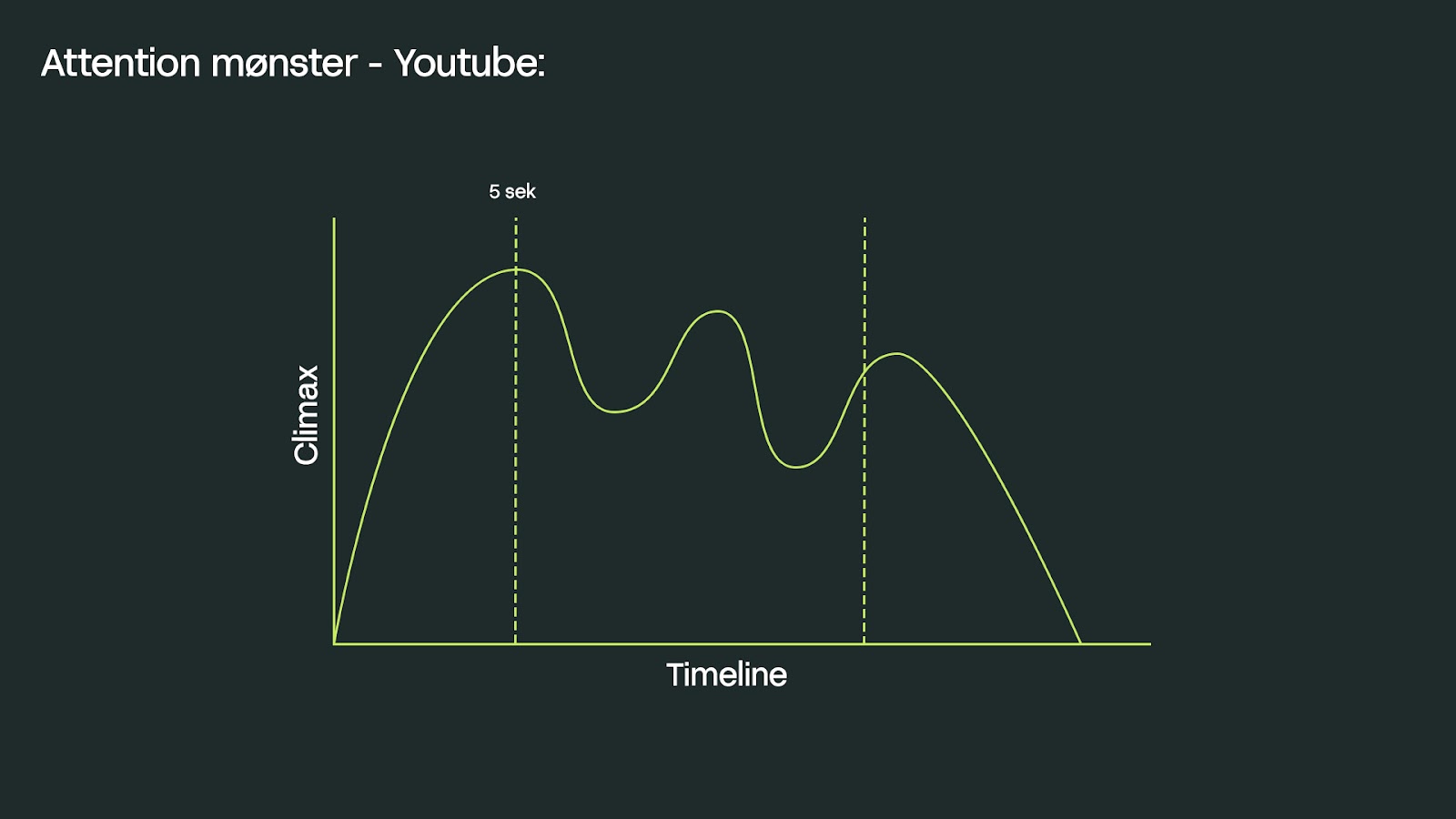
On social media, attention spans are short. Make sure your story is concise and engaging from the very start. In the model below, you can see how to structure a video designed for the attention spans of YouTube and TikTok respectively.
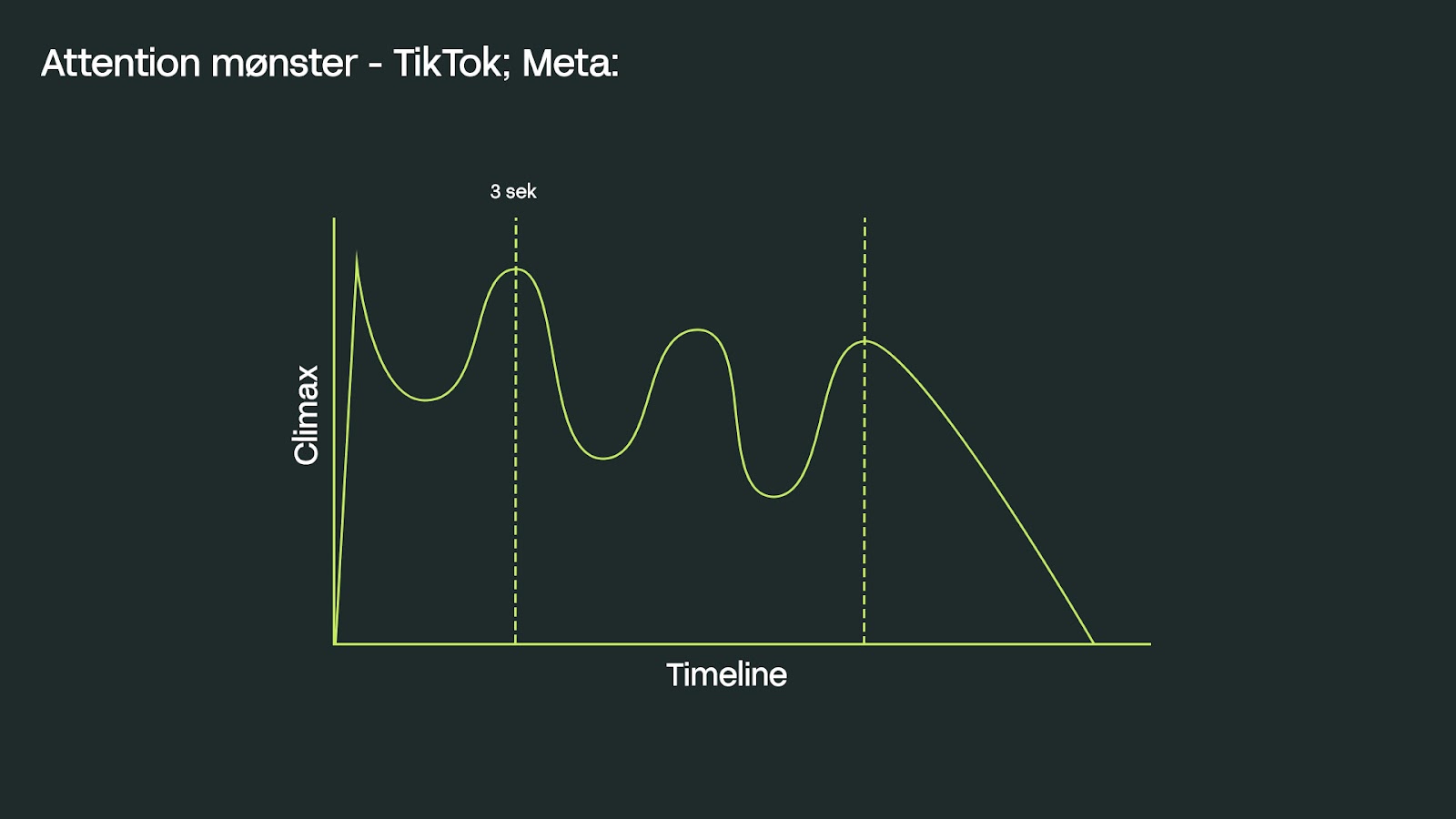
Although YouTube may not be what one normally associates with a social media platform, let's take a look at how behaviour typically works on that platform. There is a crucial difference in behaviour that makes it clear why you don't necessarily use the same techniques on platforms like Meta and TikTok as you can on YouTube. The mindset is different, because YouTube is a platform that users visit primarily to consume longer-format video.
Authenticity vs. aesthetics: Examples of effective video ads
You don't need to spend a lot of money on flashy video production to get results from your social media advertising. Often, the personal touch and the value of the content outweigh beautiful high-end productions. Here are some examples of successful video ads from both Danish and international brands that focus on authenticity over aesthetics:
Dollar Shave Club
Dollar Shave Club's campaign “Our Blades Are F***ing Great” went viral and cost only $4,500 to produce. The campaign is humorous, self-deprecating and takes a direct approach to its audience. Watch one of the videos from the campaign here:
Lego
Lego's “Rebuild the World” campaign uses great storytelling to inspire all generations to build together. Lego uses storytelling to create an emotional connection with their audience, making their videos memorable and engaging. Watch one of the videos from the campaign here:
Matas
Matas has successfully focused on inspiring their audience around the topic of beauty and personal care. By providing tips and tricks, they create a personal connection with viewers while showing how their products can be used. Watch one of the videos here:
What all three examples have in common is that the video productions are achievable for companies that don't have million-dollar marketing budgets. Here is a list of techniques you can use to replicate the above examples:
- Use authentic elements: Show your customers, employees or even yourself in the videos to create a personal connection. Authentic elements make videos more relatable and credible, which can strengthen the relationship between your business and your customers.
- Communicate simply and clearly: Focus on delivering your message in a simple and clear way. Avoid overcomplicating your video with too much information. Focus on one key message and make sure it comes across clearly. Clear and precise communication helps viewers quickly understand what you want to convey and what they should do next.
- Use humour and creativity: Don't be afraid to experiment with humour and creative ideas that can make your video stand out. A fun and unique approach can capture viewers' attention and make your video more memorable. Creative use of humour can also humanise your brand and make it more appealing.
- Build an emotional connection: Find ways to connect your product or service with emotions, whether that is joy, nostalgia or inspiration. By appealing to viewers' emotions, you can create a stronger and more lasting connection to your brand. Emotional videos often have a greater chance of being shared and remembered.
Optimising video content based on data and insights
Once your video content has been launched, it is important to continuously optimise it based on data and insights from your measurements. By analysing how your videos are performing, you can adjust and improve your content to make it even more effective.
Here are some methods for optimising your video content:
- Analyse watch time: If you notice that viewers often stop watching the video at a certain point, it may be a sign that the content at that moment is not sufficiently engaging. Consider making the video shorter or changing the content in the segments where watch time drops, to maintain viewers' attention.
- Adjust CTAs (Calls-to-Action): If you see that your click-through rate (CTR) on CTAs is low, it may indicate that your call to action is not strong enough or is not placed optimally in the video. Experiment with different CTAs — both in terms of placement, wording and visual presentation — to find out what best motivates your viewers to act.
- Test different formats: A/B testing is a powerful method for finding out what works best for your target audience. Try different video formats and styles — for example, animated videos versus live-action, or short clips versus longer videos — to see which generate the most engagement and best meet your goals.
- Use segmentation: By analysing data across different segments of your target audience, you can gain a deeper understanding of how different groups respond to your content. Use this insight to tailor your video content more precisely to the unique preferences and behaviours of different segments, which can improve the relevance and effectiveness of your videos.
By regularly measuring and testing your content, you can continuously adjust and ensure that it not only captures the target audience's attention, but also drives the desired actions and results.
Conclusion
In this article, we have reviewed how video content can be used strategically throughout the entire customer journey — from creating awareness in the top-funnel, to engaging and persuading in the mid-funnel, and finally converting in the low-funnel. We have also discussed the importance of storytelling, authenticity and simplicity, as well as how you can optimise your videos based on data and insights.
Start implementing these strategies in your own videos and see how they can improve your business's engagement, reach and conversions. Remember to experiment, measure the results, and continuously optimise your content to ensure it remains relevant and effective.
With the growing popularity of short-form video and the constantly evolving platforms such as TikTok, YouTube Shorts and Reels on Meta, it is more important than ever to be creative, authentic and data-driven in your approach to video marketing. Make video a central part of your advertising strategy, and be ready to adapt to emerging trends to stay ahead of the competition.


