Google Ads’ AI-powered capabilities
First and foremost, it is relevant to take a closer look at how Google Ads currently uses artificial intelligence. This is to provide a better understanding of how you can harness the potential and, for example:
- Reach valuable customers with Value Based Bidding.
- Convert online visitors into sales in your physical store.
- Use Google AI to increase efficiency in general.
AI in Search Ads
When it comes to Google Search, AI creates new opportunities that can ultimately help increase your revenue while also saving time. Particularly with visual searches, AI reaches far beyond language and text, making search significantly more intuitive than before, which also has a decisive impact on the end consumer.
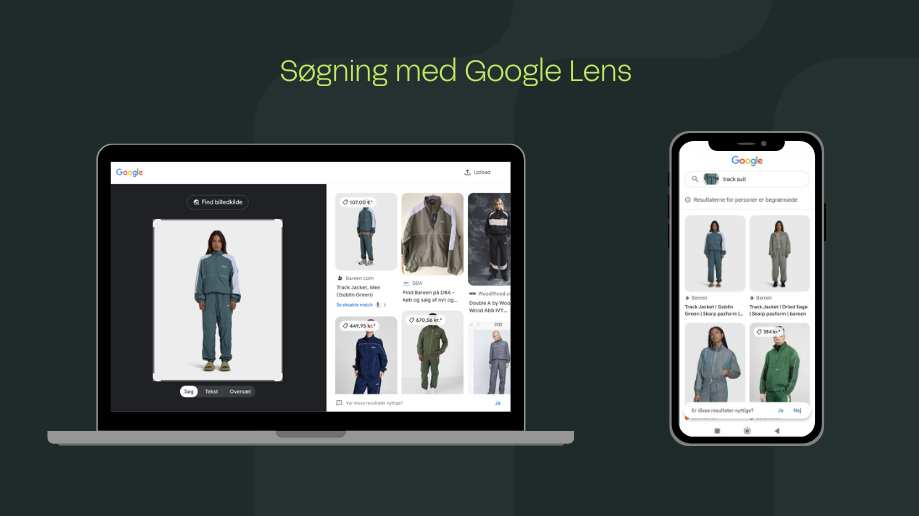
Google Lens gives consumers the ability to search for what they see using their camera or images — and it has also become possible to combine visual search with text, making the search even more specific. Multi Search likewise makes it possible to add the ‘near me’ function, which, based on the right access to data and location, provides the best suggestions in the local area.
When it comes to text search, AI makes it possible to provide better and more qualified answers to open-ended questions, partly due to Smart Language Technology. Using ‘broad match’, AI helps find words that are related to each other and suggests matches regardless of language. Combining this with an AI Bidding strategy further increases your opportunities for greater reach.
Qualified Value Based Bidding
A critical parameter for the right PPC strategy is connecting the strategy to your business goals — and with that said, Smart Bidding plays an important role.
With Smart Bidding, Google Ads offers the opportunity to leverage machine learning to partially automate the process for your ads, adjusting your advertising strategy towards your KPIs — and here it is particularly interesting to look towards Value Based Bidding.
Not all customers hold the same value for you, which is why it is not desirable to invest the same amount in every individual customer. Value Based Bidding helps advertisers maximise revenue and ROI by differentiating customers based on their value and thereby bidding on the customer with the highest value.
By differentiating your customers, you can use Value Based Bidding to bid dynamically and allocate your budget most effectively.
Three different ways to qualify your Value Bidding:
- Dynamic values: Only conversions are tracked, not the value.
- Static values tracking: Enables optimisation towards two or more conversion actions, each with their own static value.
- Conversion value rules: Trains Google Ads’ algorithm to differentiate users based on defined layers/criteria applied to your static value, e.g. location and audience.
Qualified Value Bidding requires differentiated values, and the method you should choose depends on your business strategy and tracking capabilities.
Performance Max
When it comes to using AI in relation to Google Shopping campaigns, Performance Max is the best example of this. Performance Max is powered by artificial intelligence and leverages its strength to unlock the full potential of your ads and their conversion opportunities.
Although Performance Max is primarily automated, there are areas where you can strategically manage your performance. Using a Google Merchant Center feed, you can ensure that you automatically bid for the best placement to achieve maximum conversion value for your target audience.
You can also improve your campaigns through a strategic approach to creatives. By focusing on the right ‘asset groups’ and their setup, you give Performance Max the best conditions to identify which creatives perform well and which do not — and the more ‘assets’ you add, the more effectively the system generates better combinations adapted to all channels.
Also always ensure you have insight into your audience-related performance through reports and relevant data — including first-party data — so you gain a clearer understanding of where you should optimise your efforts. By giving Google Ads access to this data, the platform gains insight into which sales have the most value and what attracts those customers. For this reason, we also recommend adding an audience to your Performance Max campaigns.
If you would like to know more about how to optimise your Google Shopping campaigns with the right setup, you can read more here.
Omnichannel Bidding Solutions
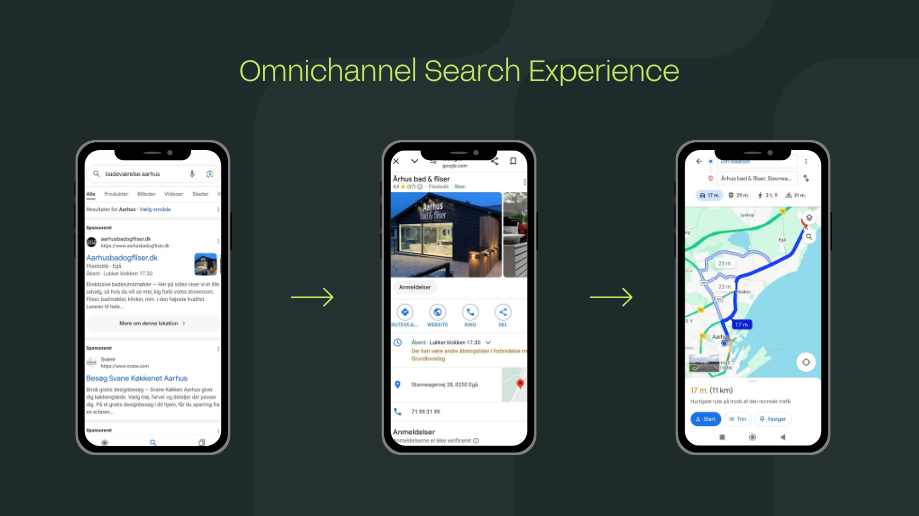
With Omnichannel Bidding, you ensure that your customers see your message regardless of where they shop or visit your business. It is therefore essential to have an Omnichannel Bidding strategy if you sell products both in-store and online.
When you aim to increase sales in your physical store, it is crucial to measure through offline actions. Local Auction Bidding in Performance Max makes it possible to report location-based clicks in connection with a campaign and is available in Google Ads. In addition, Store Visit is the simplest and most scalable format for measuring offline, whereby customers who have clicked on a campaign and subsequently visited the store are linked to those clicks.
In line with this, machine learning is used to prioritise which location signals represent the most relevant visits, which can further be enhanced with Value Based Bidding and the right KPIs. Based on your Value Bidding, it is possible to maximise the products that drive the most revenue and set different values for individual products.
Using locations, product impressions and creative ‘assets’, with the right strategy you can meet your customers on their buying journey, which will most likely optimise your traffic in the end, whether online or offline.
Optimised product data
Your performance on product data is based on the quality of the data and information Google has access to. It is therefore important to implement relevant product data so that your products can be shown in as many places as possible.
This also applies to first-party data, which tells Google which of your sales have the highest value and likewise provides insight into what attracts those customers — a valuable combination that creates added value for your campaigns’ performance.
By uploading the right product data combined with your GTIN (Global Trade Item Number), you ensure the visibility of your products. You can also increase your coverage by activating all relevant destinations and formats in combination with a unique title, attributes and search terms.
Google’s AI checklist for more efficient campaigns
In line with the latest artificial intelligence features in Google Ads, Google has released a checklist for the best setup, which can improve your efficiency when using AI.
With the above information and recommendations in mind, you can use the checklist to ensure the best possible approach to your campaigns.
Success is built on a strong foundation:
- Establish effective tagging on your website.
- Set up enhanced conversions.
- Assign values to your conversions based on business goals.
Take actions to maximise results with AI-based campaigns:
- Combine AI-based Search and Performance Max campaigns.
- Use value-based Smart Bidding.
- Invest in your website’s ad creative.
- Upgrade to the new version of Search Ads 360.
Shift mindset to prepare your organisation for success:
- Quantify your marketing’s impact on key financial metrics.
- Create a culture focused on experimentation.
- Be agile and break down silos.
Get started with streamlining your campaigns
Although Google’s machine learning algorithms have existed for some time, our experience shows that it is not a given that they function optimally without further guidance, data and information.
To get the most out of AI in creating more natural and intuitive search experiences, you can benefit from using Google’s checklist to create the best conditions for your Google Ads campaigns going forward.
If you succeed in leveraging the many possibilities of AI, artificial intelligence can contribute to increased creativity and productivity. This is driven by Smart Bidding and Google’s algorithms, which ensure that campaigns are presented when most relevant to the user, ultimately contributing to more clicks and an increase in conversions.
A solid tracking setup also plays a decisive role, as tracking every step of the customer journey gives you the opportunity to optimise your campaigns based on the right insights and understanding. You can read more about our approach to this here.


