What is SERP?
SERP stands for "Search Engine Result Page" — in other words, a search results page. This is the page you are presented with on a given search engine when you perform a search.
For example, Google's SERP:
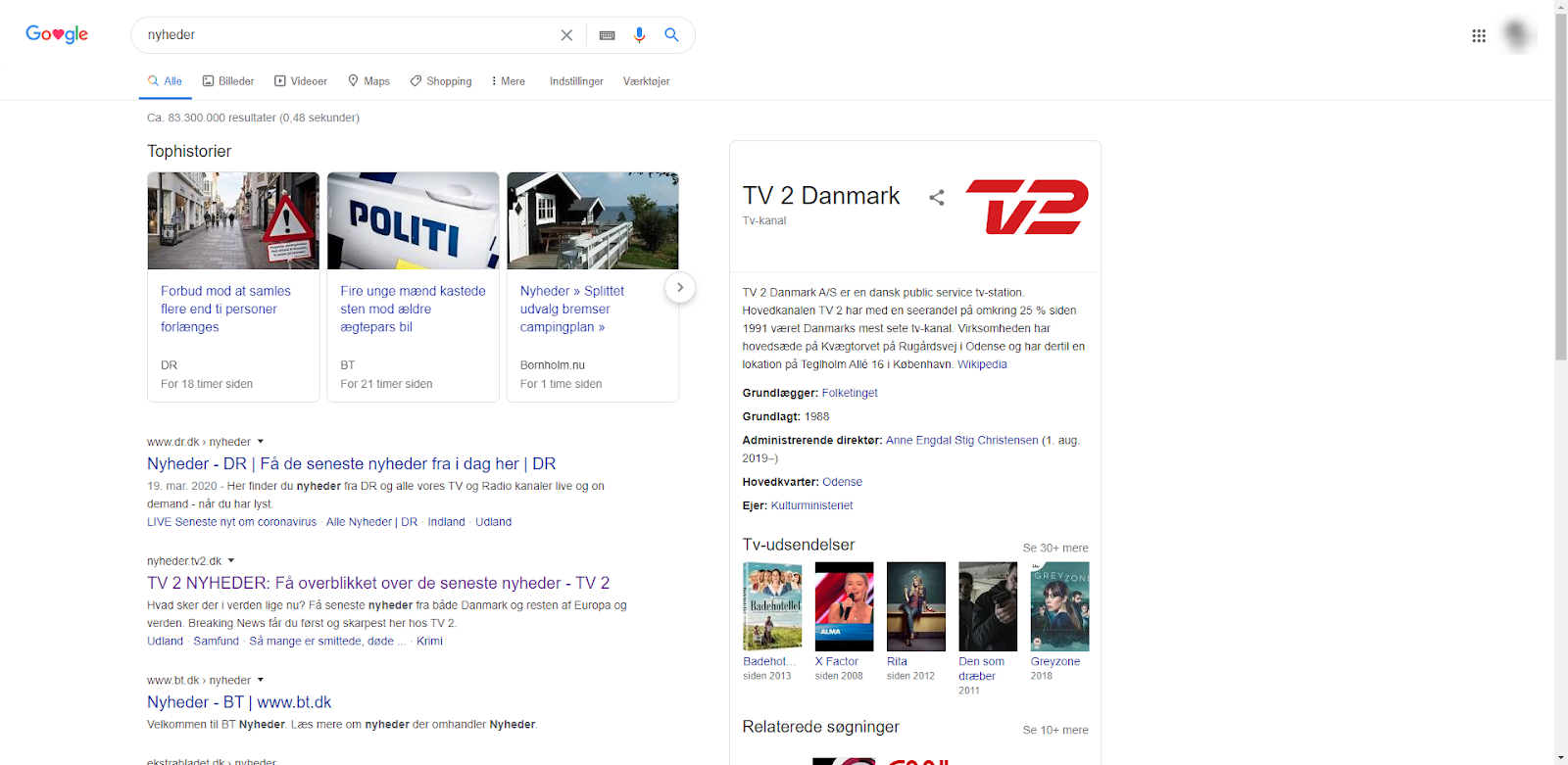
Everything on the page above is part of the SERP.
In online marketing, it is most often Google's SERP that is referred to when you hear the word "SERP", but other search engines such as Bing and Yahoo also have their own SERP.
The different elements of the SERP
Since Google's inception in 1998, much has changed in their SERP. In the beginning, only organic results were presented when you performed a search, but today you may also be presented with ads, knowledge graphs, top stories, and many other elements depending on what is relevant for the given search. Google's primary task is to make the SERP and search results as relevant as possible.
If we look at the SERP from the image above for the search "news", in addition to the organic results, a knowledge graph and top stories are also present:
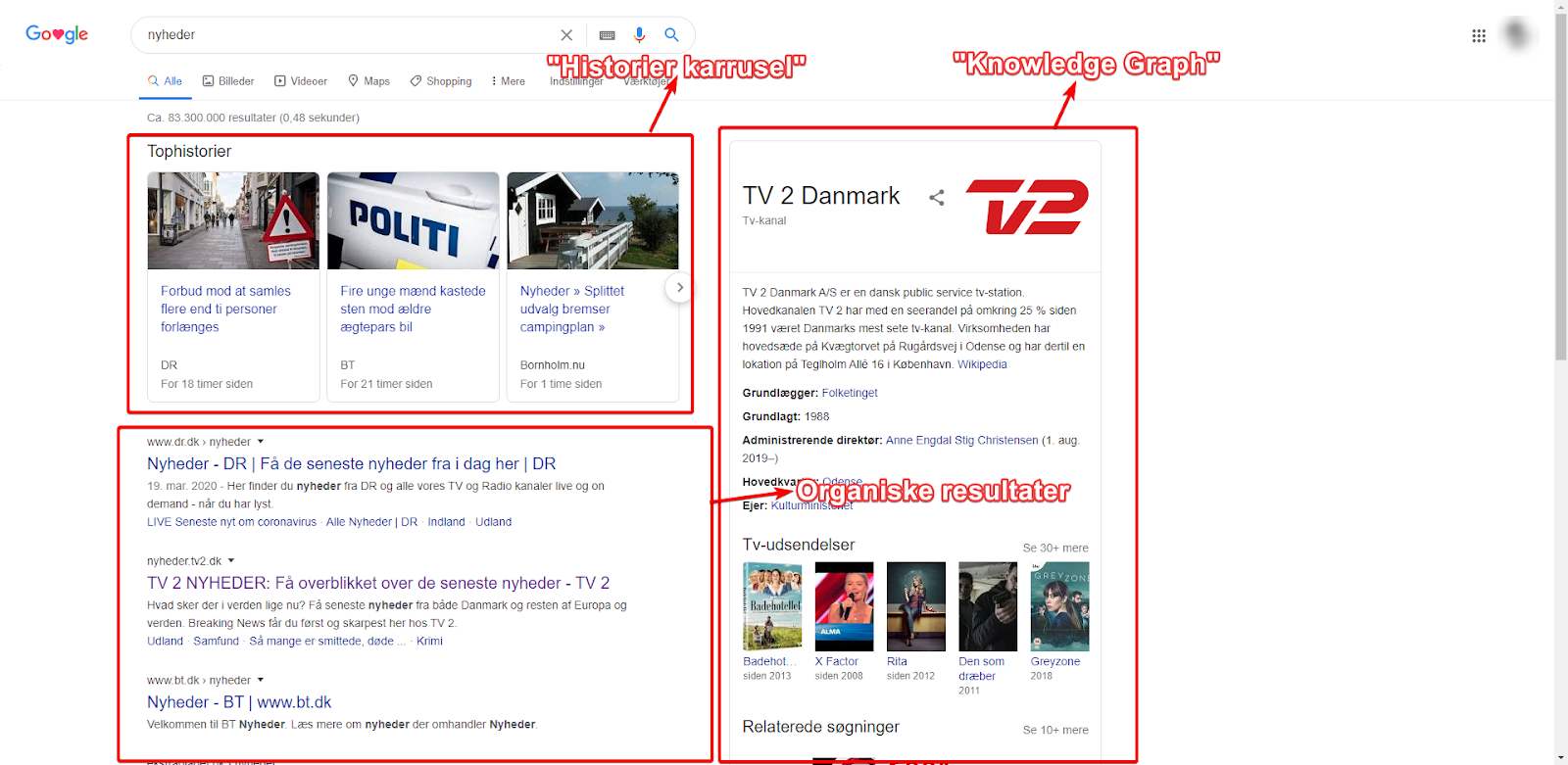
Depending on what you search for, you will be presented with different elements in the SERP that Google deems most relevant for that particular search.
If we instead search for a more commercial keyword, such as "clothing", we are presented with entirely different, more purchase-oriented elements in the SERP:
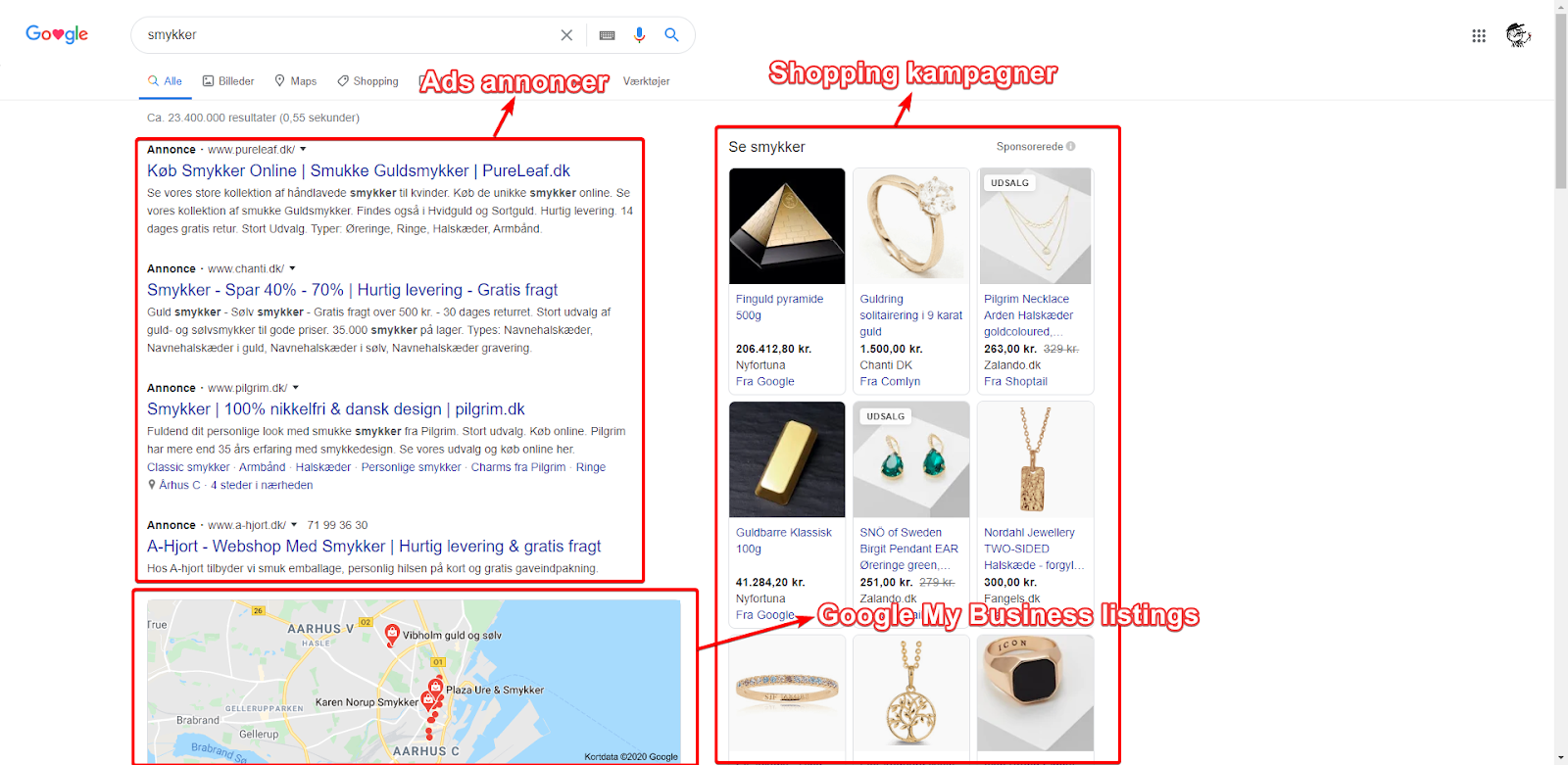
As can be seen in the image above, when searching for "jewellery", we are presented exclusively with purchase-oriented elements above the fold.
Are you ready to optimise your visibility in the SERP?
Contact us at 30 12 42 72, and we will help you improve your ranking in the search results!


