What is a product feed?
A product feed (in Danish: produktfeed) is a file containing an organised list of products and their attributes, such as name, price, description, availability, and images. This file is structured in a way that allows the platforms and tools where the feed will be used to read and understand it correctly. Product feeds are typically in formats such as CSV, XML, or JSON.
What is a product feed used for?
A product feed is used for dynamic ads across many different marketing channels, including:
- Google Shopping: Information from the product feed is pulled to generate the individual Shopping ads that users see in search results.
- Facebook and Instagram Ads: Feeds are used to create dynamic ads that show products to relevant audiences based on their interests or behaviour.
- Amazon and eBay: Feeds are essential for retailers selling on these platforms, as they ensure up-to-date product data across all markets.
- Affiliate marketing: Product feeds enable affiliates to promote specific products with up-to-date information.
- Display advertising: Use feeds to display specific products in banners and other display ads.
These feeds ensure that product information is accurate and up to date, regardless of which channel you are advertising in, ultimately increasing the chances of conversions.
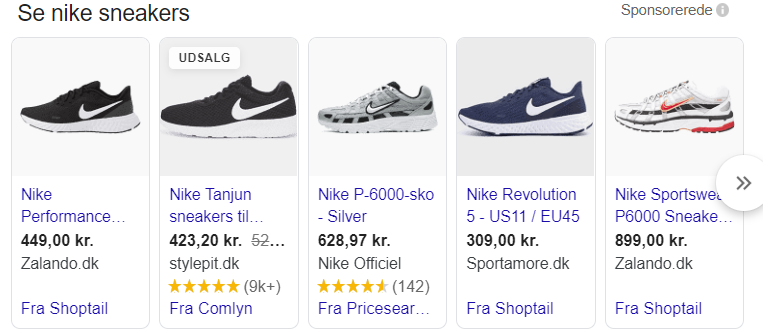
An example of a product feed is the products you see in Google Shopping. These products and their associated information are pulled from the respective companies' product feeds, which in this case are uploaded to Google Merchant Center:
How do you create a product feed?
How you create a product feed depends on the CMS or e-commerce platform you use. Most systems offer plugins or built-in tools for generating a feed that you can customise for specific marketing channels. Some platforms such as Shopify and WooCommerce have built-in features, but for more advanced needs, third-party tools may be useful.
An example of a popular feed management solution is DataFeedWatch, which helps e-commerce businesses generate and optimise product feeds for use across many different channels. With DataFeedWatch, you can create a "master feed" and then tailor it to multiple platforms such as Google Shopping, Facebook, and Amazon. This ensures that your feed always follows best practices and complies with the specific requirements of each platform.
Optimising product feeds
A crucial factor for success with product feeds is optimisation. To get your ads performing as well as possible, you need to ensure that key attributes such as:
- Product ID
- Title
- Description
- Price
- Stock status
- Image
… are correctly filled in and up to date. Incorrect or incomplete information can lead to poorer results in your campaigns, especially on Google Shopping, where an optimised feed can improve quality scores and reduce cost-per-click.
Automation and third-party integrations
Modern e-commerce platforms such as Shopify make it possible to automate feed updates via API integrations with Google Merchant Center and other platforms. If your platform supports it, you can set up automatic synchronisations so that your product data is always up to date. With services such as DataFeedWatch, you can also set up advanced optimisation rules to ensure the feed always meets platform specifications.
Do you need help creating or optimising your product feed?
Fill in the form below, or call us on 30 12 42 72 for a no-obligation conversation about how we can help you get the most out of your dynamic ads and e-commerce platforms.


